Civil constructors in Chapel Hill, NC handle the underground and below-grade work that has to happen before concrete, utilities, or a finished lot come together: grading, drainage, and utility tie-ins. Get this phase wrong on Orange County's clay-heavy, sloped lots, and every structure built on top of it inherits the problem. Here's what these contractors actually do, which local permits trigger at a specific square-footage threshold, and how to vet one before you sign anything.
What Civil Constructors Actually Do
Civil construction is the infrastructure layer underneath a finished property. It's a different trade than the general contractor who frames a house or the civil engineer who designs the plan on paper. A civil constructor builds what the engineer designed.
Grading and Excavation
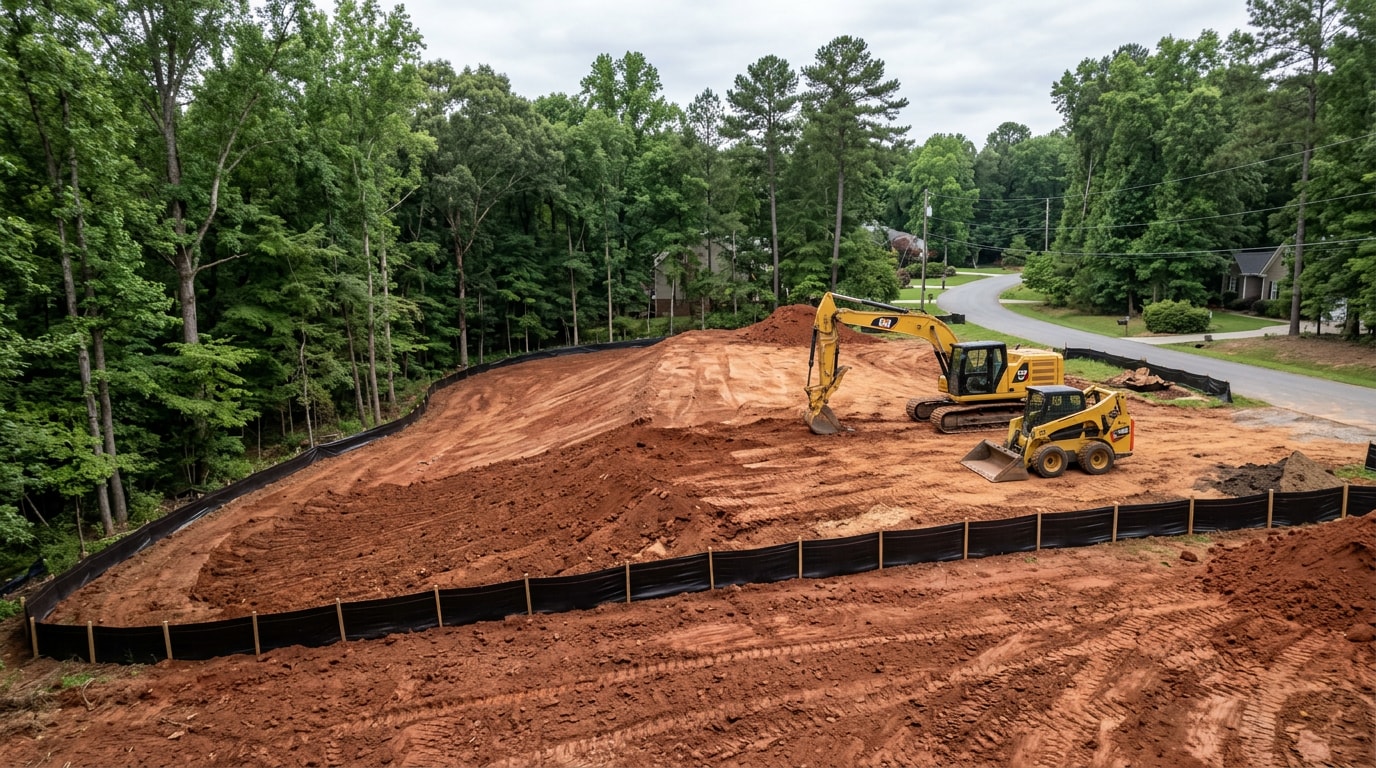
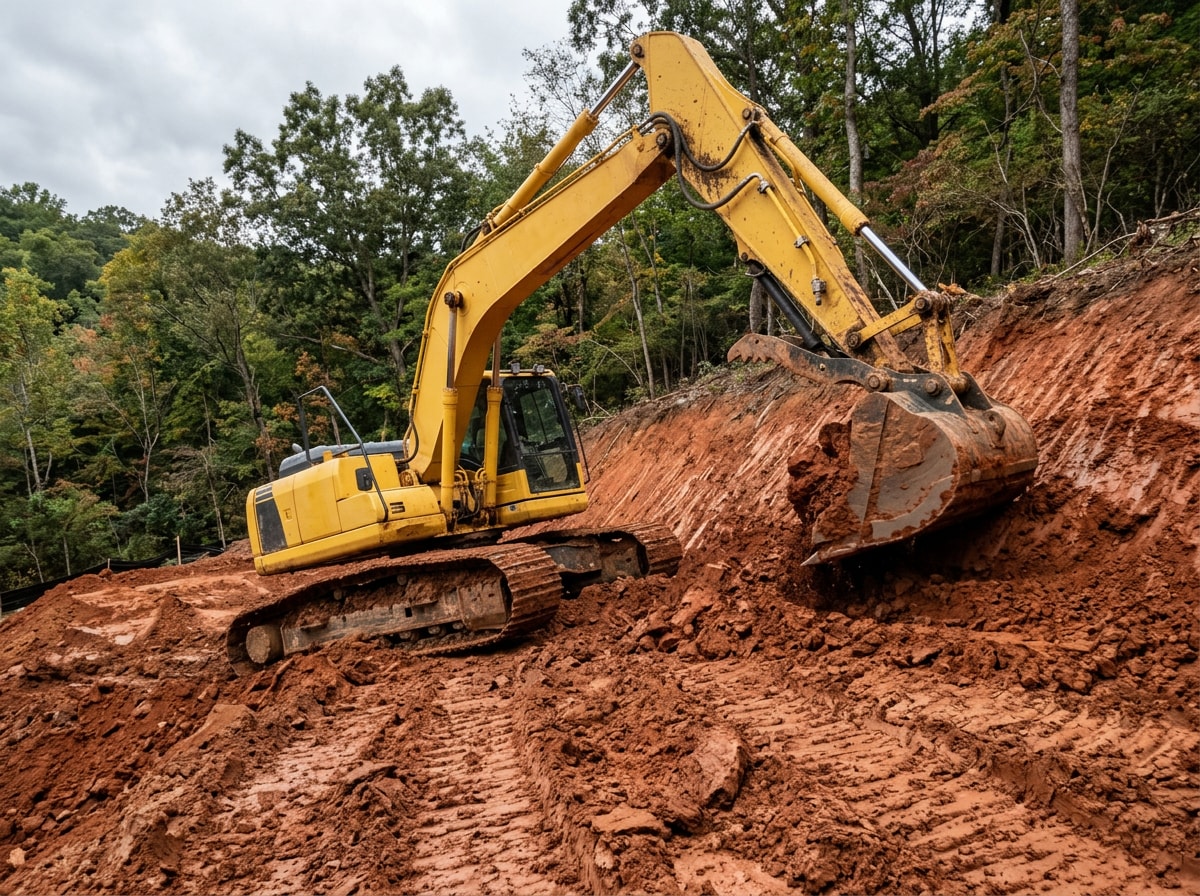
Grading shapes raw land into a buildable surface through mass grading, cut-and-fill balancing, and excavation for footings, utilities, and drainage. On Chapel Hill's rolling, clay-heavy lots, poor cut-and-fill planning shows up later as standing water, settling slabs, or a driveway that sheds water toward the house instead of away from it.
Underground Utilities
This covers installing water, sewer, and storm lines and tying them into municipal infrastructure. Every tie-in in town requires sign-off from the Town of Chapel Hill or Orange County, so a crew that already knows the review process moves faster than one learning it mid-project.
Stormwater and Drainage Management
Stormwater work controls where rainwater goes once a site is graded and paved: erosion control measures, engineered drainage, and detention where required. North Carolina's wet climate and clay soils make this a bigger design factor here than in drier regions.
Site Development
Site development is the full sequence: clearing, rough grading, utility rough-in, and final subgrade prep. Treating it as one coordinated scope instead of three separate crews cuts down on handoff errors between grading, utilities, and paving.
Chapel Hill and Orange County Permit Rules You Need to Know
This is the part most generic civil-construction content skips, and it's where projects actually get delayed. The trigger point in Chapel Hill isn't acreage first, it's square footage.
All projects which disturb more than 20,000 SF within the Town of Chapel Hill and its Extraterritorial Jurisdiction (ETJ) must have an approved Erosion and Sedimentation Control Plan and Permit from NC DEQ or Orange County Planning and Inspections. At the county level, the same threshold applies outside town limits: clearing and grading exceeding 20,000 square feet, roughly half an acre, requires a Land Disturbance Permit, with the limit lowered to 10,000 square feet in some watersheds.
A separate federal layer kicks in at the one-acre mark. A Clean Water Act permit is required for stormwater discharges from any construction activity disturbing 1 acre or more of land, or less than 1 acre if it's part of a common plan of development that will ultimately disturb 1 or more acres.
| Disturbance Size | What's Likely Required | Who Issues It |
|---|---|---|
| Under 10,000 sq ft, outside protected watersheds | Usually no erosion control permit | N/A |
| 10,000–20,000 sq ft in protected watersheds (University Lake, Cane Creek, Upper Eno) | Erosion control plan review | Orange County Planning & Inspections |
| Over 20,000 sq ft, inside Chapel Hill or its ETJ | Erosion & Sedimentation Control Plan and Permit | Town of Chapel Hill / Orange County / NC DEQ |
| 1 acre or more, anywhere | NPDES Construction General Permit | EPA / NC DEQ |
Skipping the permit step doesn't just risk a fine. It risks a stop-work order mid-project, which is far more expensive than the paperwork would have been.
Civil Contractor vs. General Contractor vs. Civil Engineer
These three get lumped together constantly, and the confusion costs people time on bids.
- Civil engineer designs the grading, drainage, and utility plan on paper and stamps it for permitting.
- Civil constructor builds that plan in the ground: earthwork, pipe, pads, roads.
- General contractor manages the vertical building that goes on top once the site is ready, including framing and finishes.
On larger projects, all three work in sequence. The civil work finishes, gets inspected, and only then does the general contractor mobilize crews for the structure itself.
What Grading and Site Development Cost in the Triangle
There's no honest flat number here, and any page that gives you one per-acre figure without seeing your lot is guessing. Acreage, soil type, slope, tree cover, and drainage complexity all move the price, and steep or clay-heavy Orange County lots generally cost more to grade than flat, sandy sites.
What you can budget for with more certainty is the permit fee itself, since that's published. Orange County's land disturbing permit fee schedule runs $600 minimum plus $600 per disturbed acre or fraction thereof for disturbances under 10 acres , which the county's own example shows works out to roughly $1,500 total on a 1.5-acre site. That's the government fee, not the construction cost. Get a site-specific bid for the actual earthwork before you lock in a budget.
How to Vet a Civil Construction Contractor
A few checks separate a contractor who will hit your schedule from one who will blow through it.
- Verify the license.
By law, a general contractor must be licensed if the total project cost is valued at $40,000 or higher in North Carolina. You can confirm any contractor's status directly through the North Carolina Licensing Board for General Contractors.
- Ask about local permitting experience. A crew that has already filed with Orange County Planning and Inspections moves faster than one filing for the first time.
- Confirm equipment and crew capacity. Can they run grading, utilities, and stormwater phases without idle gaps between them?
- Check insurance and bonding. Underground utility work and excavation carry real liability if something goes wrong.
- Ask how they handle schedule slippage. Their answer tells you more than any brochure will.
Where Civil Site Work Ends and Exterior Construction Begins
Here's something worth knowing before you plan a full property project: civil work and exterior construction are more connected than most homeowners expect. In our own scheduling across Chapel Hill properties, roof, deck, and gutter installs almost always wait on civil work finishing first, and we've watched start dates slide by weeks when a grading crew hits buried rock or an unmapped utility line.
That overlap runs both directions. Final grading determines where a new deck's footings land. Drainage work decides whether a gutter repair or downspout tie-in actually solves a water problem or just moves it somewhere else. Poor site drainage is also one of the more common hidden causes behind storm damage repair calls we get after heavy rain events. And on new builds or additions, landscaping services and roof waterproofing typically happen after the civil contractor's final grade is inspected and approved, not before.
If you're coordinating a larger Chapel Hill project where exterior and site work both matter, our guide on what to expect from a roofing project manager in Chapel Hill in 2026 walks through how that phase sequencing typically plays out.
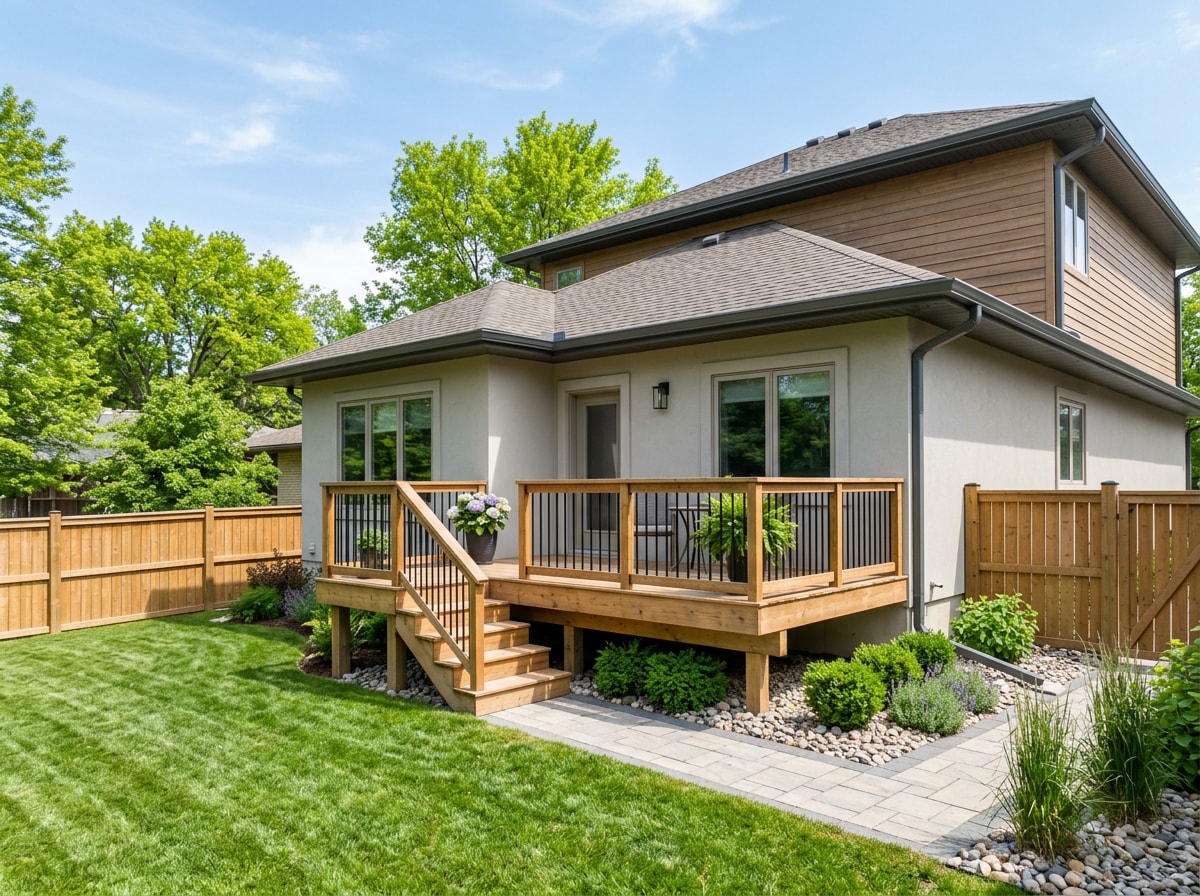
RoofPuppy handles the exterior side of that sequence across Chapel Hill and the surrounding Triangle, including deck installation, roofing, siding, and drainage-related repairs. If you're planning a project that touches both site work and the finished exterior, get a free estimate and we'll help you figure out where our scope starts.
FAQ
What's the difference between a civil contractor and a general contractor?
A civil contractor handles below-grade infrastructure such as grading, utilities, and drainage. A general contractor manages the vertical building itself, including framing, roofing, and finishes. On larger jobs, civil work finishes and passes inspection before the general contractor mobilizes.
Do I need a permit to grade land in Chapel Hill, NC?
Yes, once you cross the disturbance threshold. Inside Chapel Hill and its extraterritorial jurisdiction, any project disturbing more than 20,000 square feet needs an approved erosion and sedimentation control plan and permit. In protected watersheds like University Lake or Cane Creek, that threshold drops to 10,000 square feet.
How much does land grading cost in North Carolina?
It varies too much by site to quote a flat number honestly. Acreage, soil type, slope, and drainage complexity all drive price, and clay-heavy or steeply sloped Orange County lots typically cost more than flat, sandy ones. Get a site-specific estimate rather than relying on a generic per-acre figure you found online.
Why should I hire a licensed civil contractor instead of doing it myself?
Unlicensed grading or utility work risks failed inspections, code violations, and drainage problems that cost more to fix later than they would have cost to do right the first time. A licensed, insured civil contractor carries liability coverage and already knows the Orange County permitting process.
How do I verify a contractor's license in North Carolina?
Search the contractor's name or license number directly through the North Carolina Licensing Board for General Contractors' public lookup tool. It will show you license status, classification, and whether it's currently active.
Does civil site work affect my roof, gutters, or deck project?
Yes, more than most homeowners expect. Final grading and drainage decisions affect where deck footings land and whether gutter or downspout work actually solves a water problem. On new builds and larger additions, exterior work typically starts only after the civil contractor's final grade has passed inspection.
---
This guide was reviewed by Derek Lanning, a licensed North Carolina general contractor on RoofPuppy's field operations team who coordinates exterior projects across Chapel Hill and the Triangle. Questions about how civil and exterior work line up on your project? Contact us or visit the RoofPuppy homepage to see our full service area.