Ceiling contractors in Cary, NC field more calls about popcorn texture removal than almost any other interior job. The work looks simple online, but older Wake County homes often hide uneven texture, multiple paint layers, or asbestos-era material underneath. This guide breaks down real costs, the professional removal process, and the risks worth knowing before you book an estimate.
Popcorn Ceiling Removal Cost in Cary, NC: 2026 At-a-Glance
Costs shift based on ceiling condition, size, and whether asbestos testing is needed. These figures reflect published 2026 industry benchmarks, not a site-specific quote.
| Service | Typical Cost Range |
|---|---|
| Patch repair (small area) | $150–$400 |
| Removal only (per sq ft) | $1–$6 |
| Removal + repaint/skim (per sq ft) | $2–$7 |
| Asbestos testing | $250–$800 |
| Asbestos abatement (per sq ft) | $5–$20 |
Contractors charge about $1 to $6 per square foot for removal alone, so the larger your ceiling, the more you can expect to pay. If a sample comes back positive, asbestos removal should never be a DIY project, with costs running between $5 and $20 per square foot for professional removal, plus additional labor charges of $75 to $200 per hour. Professional testing before any work starts runs about $480 on average.
Why Popcorn Ceilings Are Harder to Remove Than They Look
A popcorn ceiling can look like a quick weekend project. The texture itself is the easy part.
The real challenges show up underneath, in the substrate, the adhesion, and what might be trapped in the material.
Hidden Risks Behind Older Ceiling Textures
Older homes often have popcorn ceilings applied directly over multiple paint layers. Adhesion varies from room to room, which makes uniform scraping difficult and raises the odds of gouging drywall in spots that resist easily.
Wake County's older neighborhoods, including pockets of Lochmere, MacGregor Downs, and Carpenter Village, are more likely to contain original ceiling texture that was never updated or tested. A scraper that glides easily in one spot can tear drywall paper in the next.
Homes built before 1978 carry an added layer of regulation. EPA's RRP Rule requires that anyone paid to perform work that disturbs painted surfaces in homes, childcare facilities and preschools built before 1978 be certified and their employees be trained in lead-safe work practices.
The rule generally does not apply to homeowners doing their own RRP projects in their own pre-1978 homes, but any paid contractor working on an older Cary home needs that certification on file.
Dust, Debris, and Containment Issues
Dry scraping a popcorn ceiling kicks up a surprising amount of fine dust. It settles into vents, flooring, and furniture fast.
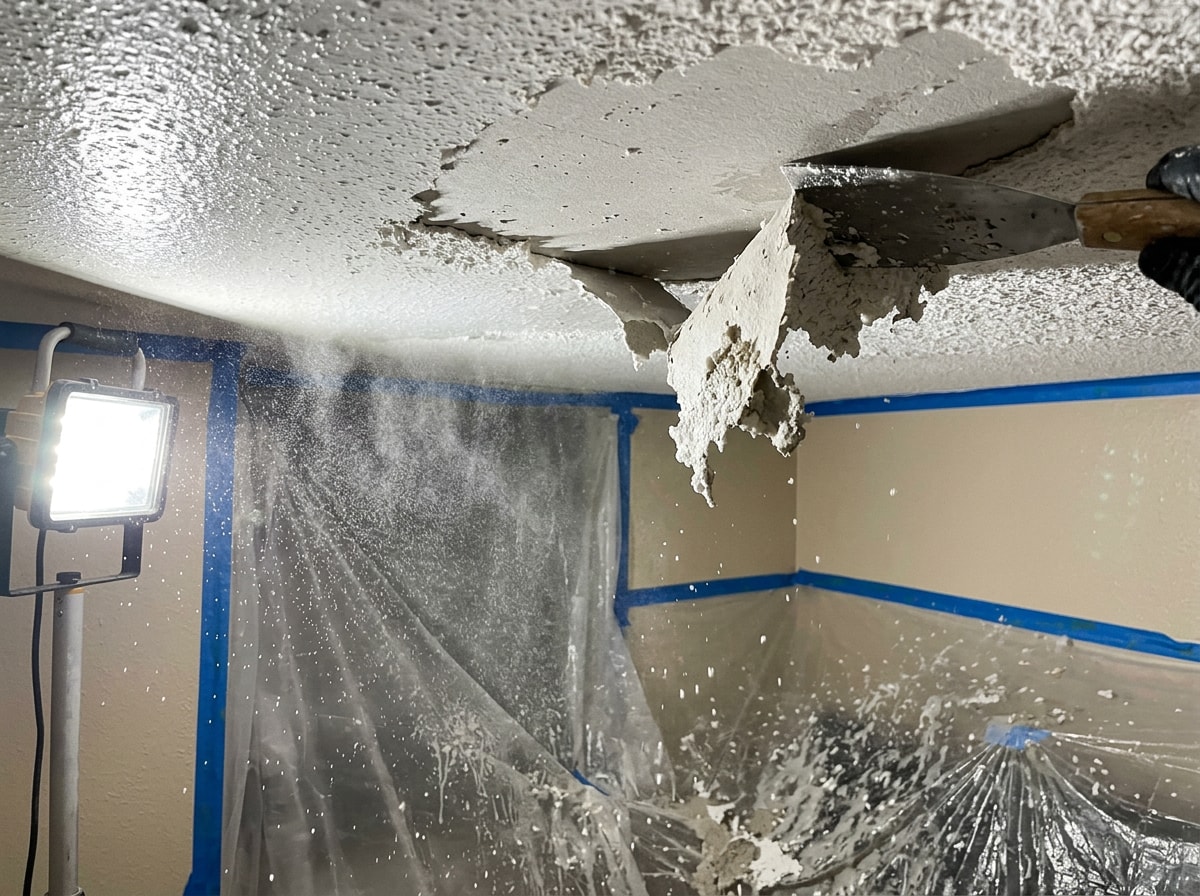
Professional crews contain the mess with plastic sheeting, sealed-off doorways, and controlled misting that keeps dust from traveling through the house. Debris disposal matters too, since wet-scraped material is heavier and needs proper bagging, not just a broom and a trash bag.
Skipping containment is one of the biggest reasons DIY popcorn removal turns into a bigger cleanup job than expected.
How Professionals Handle Popcorn Ceiling Removal
A reliable scope of work follows a predictable sequence. Knowing these steps helps homeowners compare quotes and spot a contractor who's skipping corners before work even begins.
- Inspection and surface testing. Before any scraping starts, the crew tests a small section to determine whether the texture is water-based, painted over, or sealed with a topcoat. This shapes the whole approach: painted ceilings need more aggressive wetting, while untouched texture responds to a light mist.
- Asbestos screening. If the home predates 1980, a sample goes to a lab before work proceeds.
- Controlled wetting and scraping. A garden sprayer lightly mists small sections, letting water soak in for several minutes before scraping. This softens the material so it lifts in sheets rather than crumbling into airborne dust.
- Drying, sanding, and re-taping. The surface dries, gets sanded smooth, and exposed seams are re-taped.
- Skim coat and finish. A final skim coat prepares the ceiling for primer and paint.
On jobs across Cary's older subdivisions, crews commonly find two or three paint layers over the original texture, which is exactly why a quick phone quote without an in-person test can miss the real scope of work.
DIY Popcorn Ceiling Removal vs. Hiring a Professional
Cost is usually what pushes homeowners toward DIY, but popcorn ceiling removal carries enough risk that the math doesn't always work out.
| Factor | DIY Approach | Hiring a Professional |
|---|---|---|
| Time | 2–4+ days for an average room | Typically 1–2 days |
| Tool cost | $50–$150 in rented or purchased equipment | Included in quote |
| Cleanup burden | Falls entirely on homeowner | Contractor handles containment and disposal |
| Drywall damage risk | Higher, especially on a first attempt | Lower, with repair included if needed |
| Resale-readiness | Inconsistent finish may need redoing | Finish-ready for paint or listing |
Online tutorials make this job look like an afternoon project, but the reality includes more variables than most people plan for. DIY removal often runs longer than expected once drywall damage, uneven patching, or hidden texture layers show up mid-project.
Get a free estimate to see how your project compares before deciding between DIY and hiring out.
Cost Factors That Actually Move the Price
Most price swings come down to three variables: how much ceiling needs work, whether the material tests positive for asbestos, and the condition of the surface underneath.
- Size. Per-square-foot pricing is the standard way to quote this work. A small 100-square-foot bedroom ceiling might run a few hundred dollars, while a 2,000-square-foot single-story home can reach into the thousands once removal, disposal, and refinishing are included.
- Asbestos testing and abatement. Testing is a non-negotiable step for pre-1980s ceiling material. If a sample tests positive, abatement costs climb fast because only licensed crews can legally handle it.
Violations of federal lead and asbestos handling rules can lead to penalties up to tens of thousands of dollars per day per violation, which is why licensed crews follow strict containment protocols rather than cutting corners.
- Ceiling condition. Cracks, sagging, or water stains add prep work on top of base removal pricing, since damaged drywall often needs patching or full panel replacement before refinishing.
A ceiling needing water damage repair usually costs more because the contractor has to address the underlying moisture issue first, not just the texture. As a full-service exterior and interior remodeling company, RoofPuppy also handles the roof and siding problems, like a roof leak, that cause ceiling stains in the first place.
Handling asbestos-containing material without proper precautions isn't just risky, it's regulated. OSHA's construction standard at 29 CFR 1926.1101 covers asbestos work including removal or encapsulation of materials, and the installation of products containing asbestos. Licensed abatement crews are required to follow it.
Popcorn Ceiling Removal Cost by Project Size
Project size is one of the clearest cost drivers. This room-by-room reference helps homeowners gauge what to expect before scheduling an estimate.
| Ceiling Size | Removal Only | Removal + Paint | With Asbestos Abatement |
|---|---|---|---|
| 300 sq ft (bedroom) | $300–$1,800 | $600–$2,100 | $1,500–$6,000 |
| 500 sq ft (living room) | $500–$3,000 | $1,000–$3,500 | $2,500–$10,000 |
| 1,000 sq ft (multiple rooms) | $1,000–$6,000 | $2,000–$7,000 | $5,000–$20,000 |
| 1,500 sq ft (whole floor) | $1,500–$9,000 | $3,000–$10,500 | $7,500–$30,000 |
These ranges are wide because asbestos abatement pricing varies heavily by region and containment requirements. Homes in Cary, Apex, and Morrisville, along with other Wake County communities, tend to fall within these bands, though older homes with significant water damage can push costs higher.
If your renovation plans go beyond the ceiling into a larger project, like finishing a standalone living space, our ADU ideas in Morrisville, NC guide covers styles and design tips worth reviewing before you scope the full job.

Skim Coat vs. Texture Covering: What's the Difference?
Skim coating is a lower-cost alternative to full texture removal, and it's a common question once homeowners see removal pricing.
Skim coating after popcorn removal applies a thin layer of joint compound across the entire ceiling to create a smooth, modern finish, typically running $1–$2 per square foot on top of removal costs. Texture covering, by contrast, applies a new texture directly over the old popcorn without scraping it off first. It's a faster, cheaper fix, but it can still show old texture lines in certain lighting.
A full skim coat generally holds up better over time and photographs better for resale, which is why many Cary homeowners choose it over a quicker texture-over-texture patch.
Does Cary's Labor Market Change the Price?
National averages are a helpful starting point, but local labor rates shape the final number. Here's what the data actually shows, and it runs counter to a common assumption.
Workers in the Raleigh-Cary, NC Metropolitan Statistical Area had an average hourly wage of $34.01 in May 2025, compared to the nationwide average of $33.54, but that overall figure hides a lot of variation by trade. For construction and extraction occupations specifically, which includes drywall and ceiling crews, the mean hourly wage in Raleigh-Cary sits at $27.66 versus $31.42 nationally.
In plain terms: general trade labor in the Triangle tends to run below the national average, not above it. Homeowners pricing out ceiling work in Cary shouldn't assume Research Triangle growth has pushed contractor rates above what you'd pay in a typical mid-size U.S. metro. Permitting requirements and disposal fees, not base labor rates, are more likely to vary by municipality within Wake County.
Benefits of Removing a Popcorn Ceiling
Not every ceiling needs full removal. Smaller cracks, water stains, or isolated texture damage are often better solved with a targeted patch than a whole-room project. But for ceilings in poor shape or ahead of a sale, full removal has real upside:
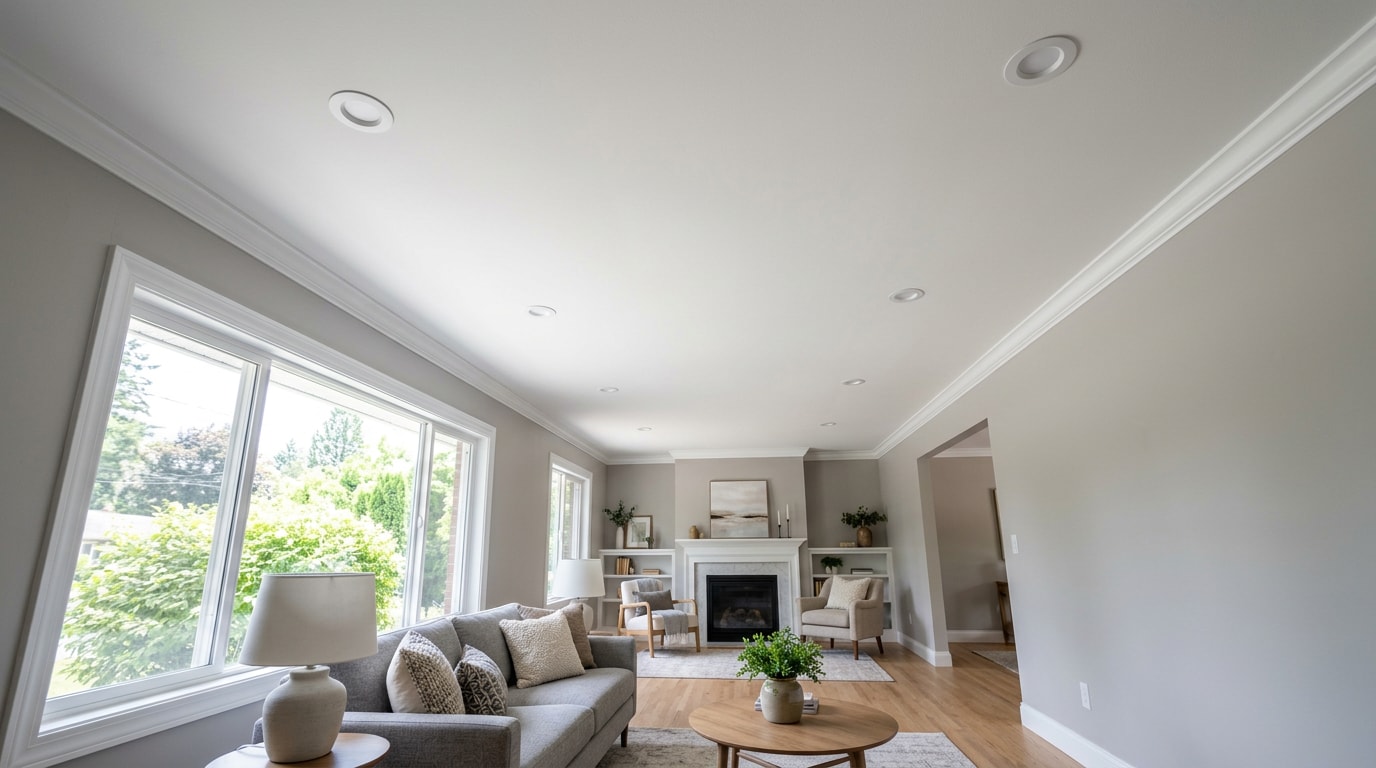
- Better light reflection. Smooth surfaces bounce light more evenly than textured ones, making rooms feel brighter and larger.
- Instant modernization. Popcorn texture is one of the fastest visual cues of an outdated interior.
- Easier cleaning. A smooth ceiling doesn't trap dust the way a textured surface does.
- Fewer surprises at resale. Buyers increasingly expect smooth ceilings in updated homes.
Pairing removal with proper drywall repair ensures cracks or damage uncovered during the project get addressed in the same visit rather than left for a separate job.
FAQ
How long does popcorn ceiling removal usually take?
Most single-room jobs take one to three days, including prep, scraping, drying, sanding, and repainting. Larger homes, or rooms needing drywall repair, asbestos testing, or a full skim coat, can extend the timeline closer to a week.
Is popcorn ceiling removal messy?
Yes. Scraping produces a lot of fine dust and debris no matter who does the work. Professional crews minimize the mess with plastic sheeting, sealed doorways, and wet-scrape methods. DIY removal without proper containment tends to spread dust much further through the house.
Can all popcorn ceilings be safely removed?
Most can be removed safely, but homes built before 1980 may contain asbestos and need testing first. Once a sample confirms the material is safe, standard wet-scrape removal applies. If asbestos is present, licensed abatement professionals need to handle the material instead of a general ceiling contractor.
Do I need to repaint after removing a popcorn ceiling?
Yes. Removal leaves raw drywall and patched seams exposed, so a primer coat seals the surface before paint. Skipping this step leaves the ceiling looking patchy even if the texture removal itself was done well.
What's the difference between removal and texture covering?
Full removal scrapes off the existing popcorn texture entirely, exposing bare drywall for a smooth finish. Texture covering applies a new layer directly over the old texture, which costs less but can leave subtle unevenness. Removal gives a cleaner, longer-lasting result; covering works as a faster budget option.
Does removing a popcorn ceiling increase home value?
It can. Smooth ceilings are a common ask from buyers touring updated homes, and an inconsistent or dated popcorn texture is one of the first things real estate agents flag during a listing walkthrough. The return depends on overall home condition, but it rarely hurts resale-readiness.
Ready to get your ceiling scoped properly the first time? Get a free estimate from a local crew that tests before quoting, not after.
This guide was prepared by the RoofPuppy editorial team with input from field crews serving Cary and the greater Triangle area. For project-specific questions, contact RoofPuppy directly.