Commercial foundation contractors in Wake County, NC deal with a different beast than residential crews: heavier loads, stricter permitting, and red clay soil that shifts with every wet Carolina season. Hire the wrong team and a cracked loading dock becomes a six-figure liability instead of a routine repair. This guide breaks down the repair methods, real cost ranges, and vetting questions that separate a qualified foundation specialist from a sales pitch.
Why Wake County Soil and Climate Stress Commercial Foundations
Wake County sits on expansive Piedmont clay that swells when it's saturated and shrinks when it dries out, and that cycle repeats every year. Heavy regional storms add stormwater pressure against retaining walls, slabs, and below-grade structures on top of the soil movement. A property that ignores early cracking, sloping floors, or sticking doors risks lost revenue, tenant disputes, and a drop in asset value down the road.
That combination, expansive clay plus heavy seasonal rain, is why commercial foundation work here needs a contractor who understands local soil behavior, not a crew that learned on a different climate.
Commercial Foundation Repair Methods Used in Wake County
A foundation problem on a commercial building carries different stakes than one in a house. A sinking warehouse floor halts operations. A cracked retaining wall creates real liability for everyone who walks past it. Here are the methods licensed contractors use to address both.
Deep Foundation Systems and Underpinning
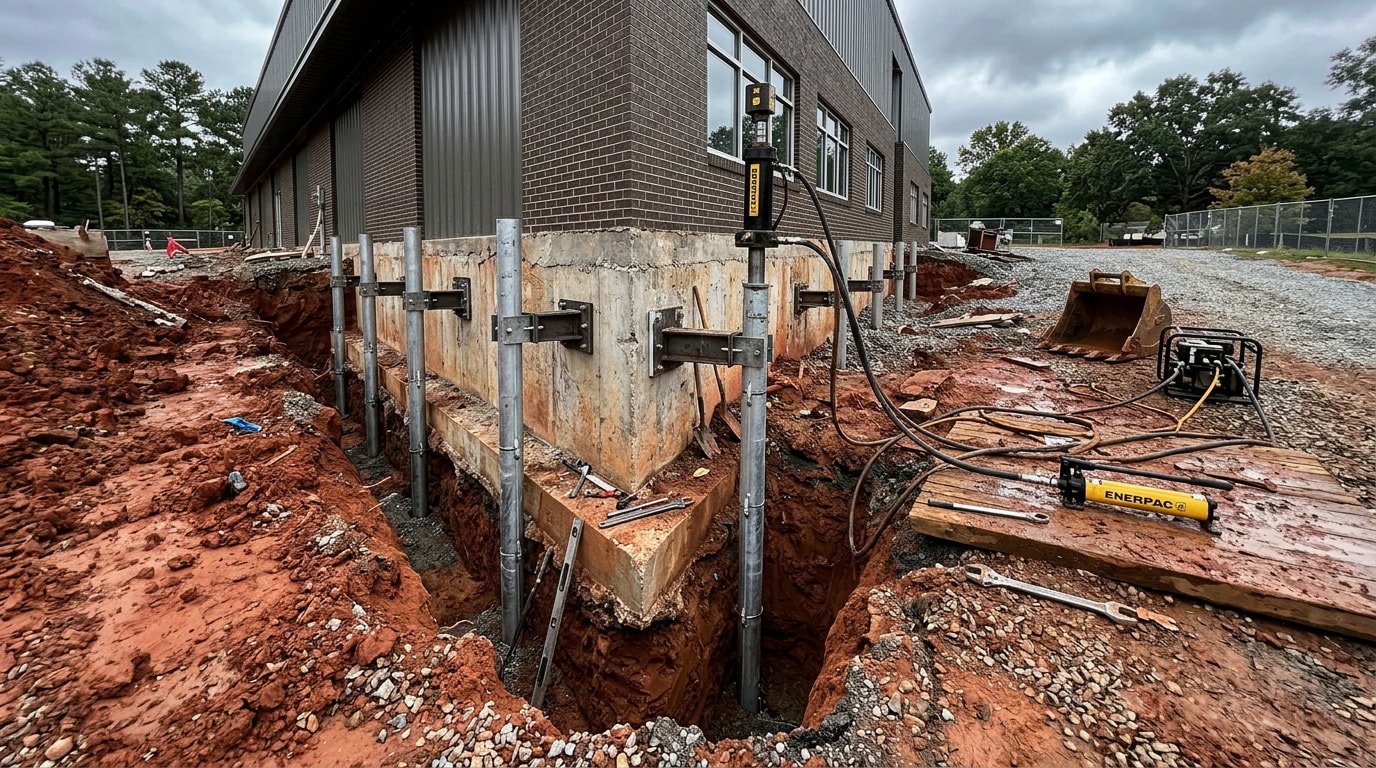
Deep foundation systems support buildings carrying heavy loads or sitting on unstable soil by extending piles or piers down to stable bearing soil or rock. Underpinning retrofits an existing, settling structure, while deep foundation construction is specified upfront for new heavy-load builds. Both approaches stabilize structures long-term, but they're engineered differently depending on whether the building already exists.
Helical Piles vs. Push Piers
Helical piles use a steel shaft with helix-shaped plates that screw into the soil, while push piers use a bracket that hydraulically drives steel tubes into load-bearing soil beneath the footing. Choosing between them depends on building type, soil depth, and timeline.
| Factor | Helical Piles | Push Piers |
|---|---|---|
| Load capacity | Moderate to high | High |
| Install speed | Fast, doesn't need building weight to drive | Requires building weight to drive piers |
| Best fit | Lightweight to mid-weight structures, retail | Heavier structures, warehouses |
| Cost range | Moderate | Moderate to higher |
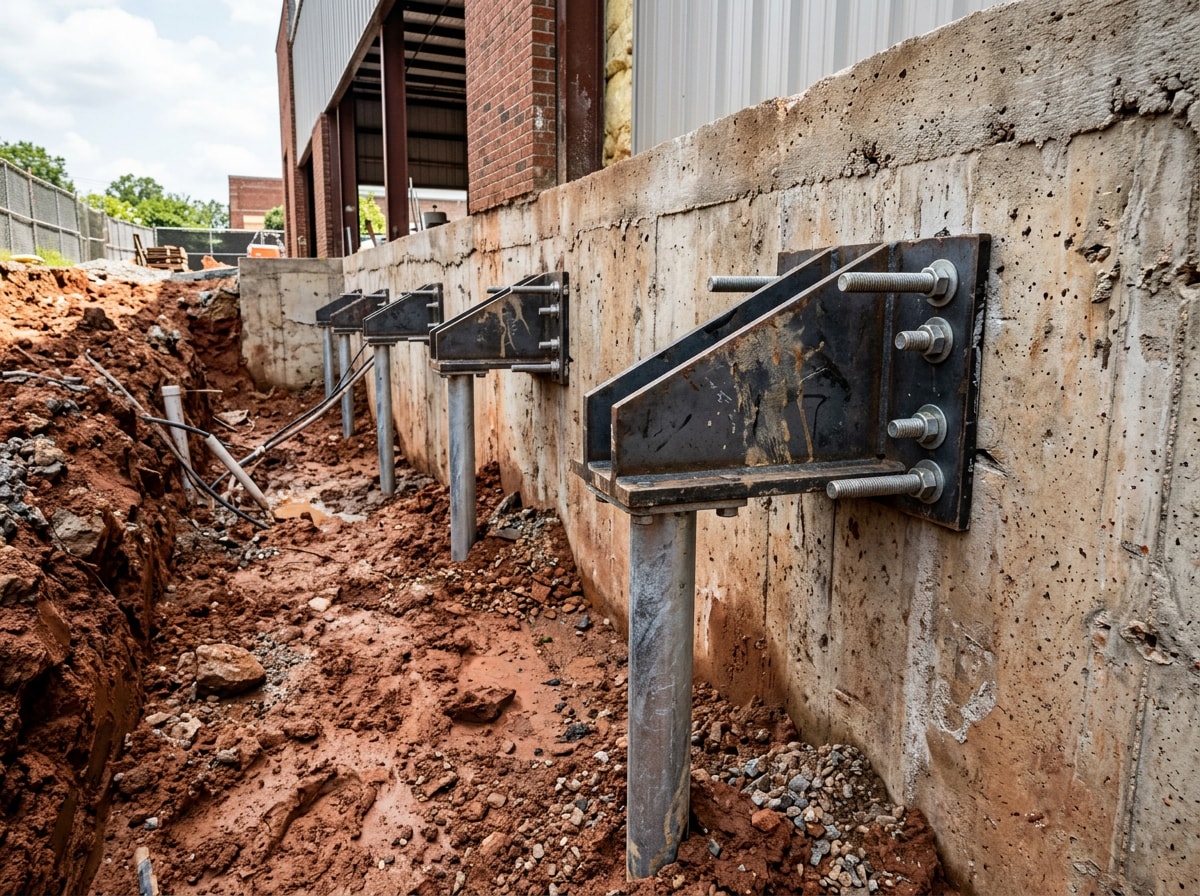
Helical pile spacing and capacity on most Wake County commercial jobs trace back to ICC-ES AC358, the acceptance criteria used to evaluate helical pile and pier products for code compliance, which requires submittal of product test results, calculations, quality documentation, and follow-up inspections . Ask any contractor proposing helical piles whether their system carries a current ICC-ES evaluation report under this standard.
Polyurethane Injection for Soil Stabilization
Polyurethane foam injection addresses poor soil conditions by expanding into voids, offering soil stabilization and concrete lifting for settled slabs. Commercial crews commonly use it to raise warehouse floors or fill sinkhole-related voids beneath loading areas with minimal downtime.
Structural Reinforcement and Crack Repair
Reinforcement work includes concrete column reinforcement, crack repair through epoxy injection, and wall anchoring to halt bowing or leaning walls. These methods address damage before it threatens occupancy. ACI CODE-562 is the first code specifically written for repairing reinforced concrete, covering evaluation, analysis, structural repair design, and durability requirements that contractors and engineers reference on commercial repair projects.
Retrofitting, Retaining Walls, and Exterior Waterproofing
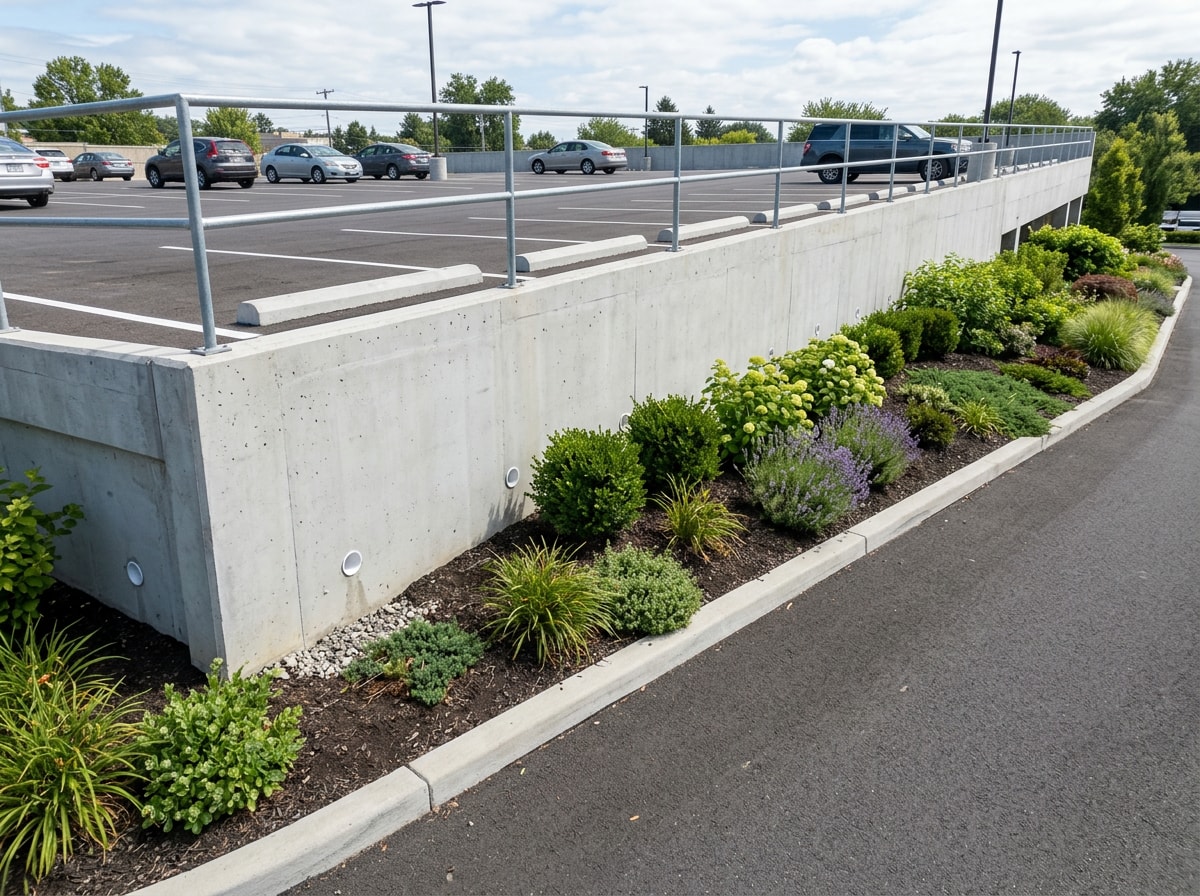
Retrofitting brings older commercial structures up to current structural standards, while retaining wall repair addresses grade changes around parking decks and loading areas. Fewer contractors offer this specialty work, which makes it worth asking about directly during your vetting calls.
Commercial exterior waterproofing protects below-grade walls and basements from hydrostatic pressure and water intrusion, a different scope and material set than residential crawl space sealing. Proper below-grade waterproofing prevents mold, structural decay, and the kind of tenant complaints that end up in a lease dispute.
How Much Does Commercial Foundation Repair Cost in Wake County?
Commercial foundation repair pricing swings hard based on building size, pier count, and soil depth. Isolated repairs on a small retail unit might run a few thousand dollars. Large-scale underpinning across a multi-tenant warehouse can run well into six figures.
| Project scope | Typical price driver | Rough range |
|---|---|---|
| Isolated crack repair or minor pier set | Square footage affected, access | Low thousands |
| Helical or push pier run on one wall | Pier count, soil depth to bearing | Mid thousands to low tens of thousands |
| Full-building underpinning | Total perimeter, number of piers, engineering fees | Tens of thousands to six figures |
Treat every number here as a planning reference, not a quote. Commercial foundations rarely follow a standard template, so get a site-specific evaluation before budgeting a number.
How to Vet a Commercial Foundation Contractor Before You Sign
Most pages ranking for this topic are written by foundation companies selling their own pier systems. That's useful for understanding methods, but it's not neutral advice on how to choose between them. Here's the checklist we tell Wake County property and facility managers to run through before signing anything:
- Verify the NC license. Confirm active licensing and ask for proof of liability and workers' comp insurance before anyone sets foot on site.
- Ask who stamps the engineering. A legitimate pier or underpinning plan should carry a PE stamp, not just a sales rep's sketch.
- Confirm who pulls the permit.
Wake County requires a foundation inspection after all foundation supports are installed and prior to backfilling, checking foundation supports, footing projections, vents, ground clearances, and drainage or waterproofing where required. Your contractor should handle this, not leave it to you.
- Get the warranty in writing. Ask whether it's transferable to a future owner and what voids it.
- Request references from commercial jobs of similar scope. A crew that's great at residential crawl spaces isn't automatically ready for a tilt-up warehouse.
- Compare at least two bids on method, not just price. If one bidder proposes helical piles and another push piers for the same job, ask each to explain why.
That last point matters more than it sounds. Property managers who skip it end up comparing apples to oranges on price alone, without understanding why the methods differ.
When Foundation Settlement Shows Up on Your Roofline or Exterior
Foundation movement doesn't stay contained to the slab. Settling corners pull on load-bearing walls, which can rack a roofline, stress flashing, and open gaps where water gets into a building envelope. If you're already scheduling a foundation evaluation, it's worth having your roof and exterior checked at the same time, since the same storm cycles stressing your slab are stressing your roof deck and gutters.
That's where our crews at RoofPuppy come in. We handle commercial roofing across Wake County, NC, and we routinely get called in after a foundation contractor finishes structural work to check whether settlement cracked flashing or opened a roof leak. A free roof inspection is a fast way to rule that out, and if storm damage is part of what triggered the settlement in the first place, our storm damage repair team can assess that separately.
If you're planning new construction alongside a foundation project, like an accessory structure, our ADU ideas guide for Morrisville, NC walks through design and foundation considerations for 2026 builds.
FAQ
How much does commercial foundation repair cost?
Commercial foundation repair cost varies widely based on building size, pier count, and soil depth. Most jobs range from a few thousand dollars for isolated repairs to six figures for large-scale underpinning. Get a site-specific quote rather than relying on averages, since commercial foundations rarely follow a standard template.
How long does commercial foundation repair take?
Minor repairs may take only a few days. Helical or steel pier installation typically runs one to two weeks. Larger jobs involving multiple structures or extensive underpinning can extend several weeks depending on scope.
Will foundation repair disrupt my business operations?
Most commercial crews can schedule work in phases or during off-hours to minimize disruption. Discuss scheduling upfront so your contractor can plan around peak operating hours, tenant access, and delivery schedules.
What are the signs a commercial building needs foundation repair?
Common signs include wall cracks, uneven or sloping floors, sticking doors and windows, and visibly sinking slabs. Cracks wider than a quarter-inch, or cracks that keep growing, warrant a professional inspection.
Do I need a structural engineer for commercial foundation repair?
For anything beyond a cosmetic crack, yes. Underpinning, pier systems, and retaining wall repairs on commercial buildings should carry engineer-stamped plans, and a NC general contractor license is generally required at $40,000 or more in project value , with licensed trade contractors required for electrical, plumbing, and mechanical work tied to the project.
What license does a commercial foundation contractor need in North Carolina?
They need an active NC general contractor license for projects at or above the state threshold, plus the liability and workers' comp coverage Wake County's permitting office will ask to see before issuing a permit.
Ready to check whether foundation settlement has affected your roof or exterior? Get a free estimate and we'll tell you straight whether it's a roofing issue, a foundation issue, or both.