Commercial demolition contractors in Raleigh, NC handle a different scope of work than a residential teardown crew ever will. Office buildings, retail centers, warehouses, and industrial sites come with structural engineering surveys, NESHAP asbestos rules, and city permitting that a two-person demo crew isn't set up to navigate. This guide breaks down the service types, real cost drivers, and licensing checks you need before signing a contract.
What Commercial Demolition Contractors Actually Do
A general residential crew usually isn't equipped for commercial-scale work. Office buildings, retail stores, warehouses, distribution facilities, and multi-unit commercial properties each come with their own structural, logistical, and regulatory demands.
Commercial demolition contractors bring engineers, permitting staff, and heavy equipment operators who understand occupied-site constraints, utility shutoffs, and adjacent-property liability. As the Triangle keeps growing, that expertise matters more every year, not less, because more of the demolition happening around Raleigh now sits next to active businesses instead of empty lots.
Before comparing contractors, it helps to see how demolition fits into a larger project. Our team at Roof Puppy coordinates with demolition and general contractors on commercial roofing projects across Raleigh and Wake County where an old roof system has to come off before new work can start.
Types of Commercial Demolition Services
Most commercial projects fall into one of three categories.
Full Building Demolition
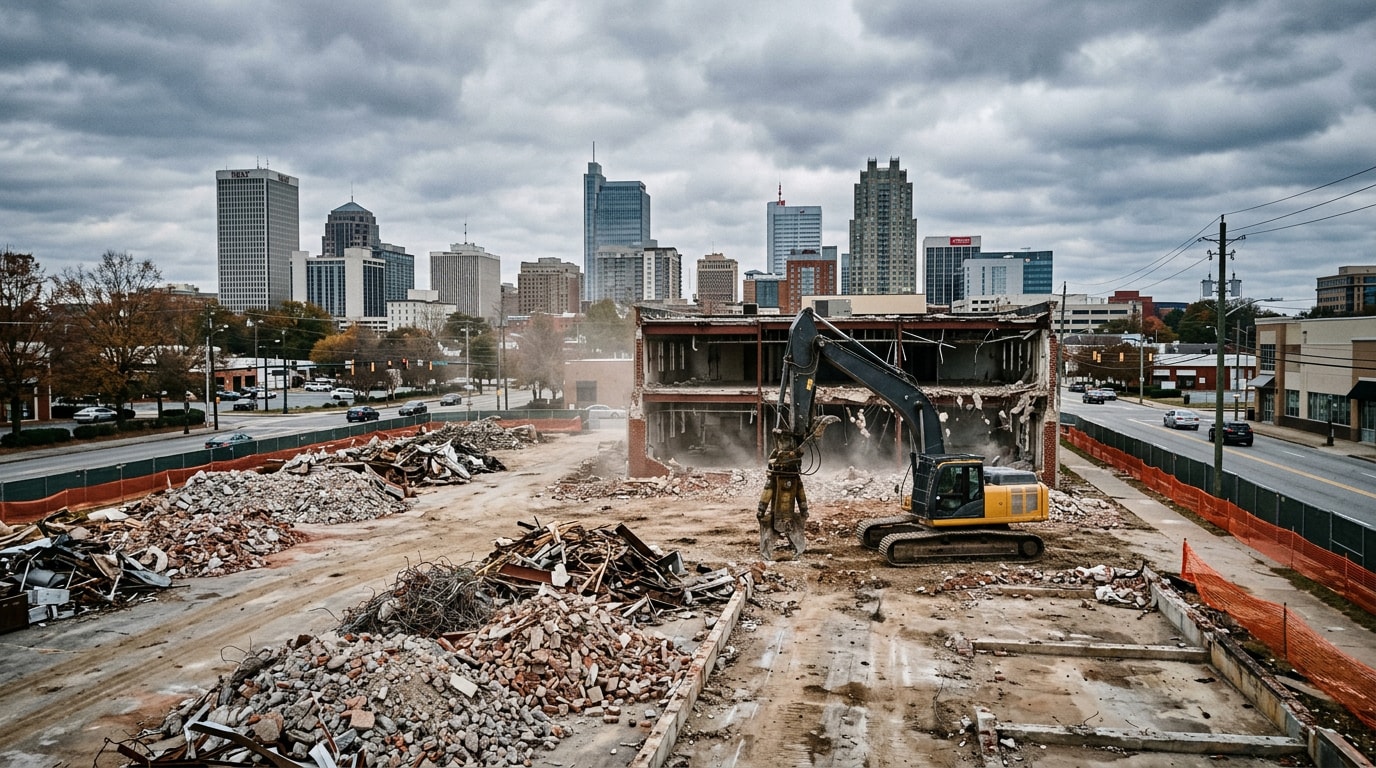
Full building demolition starts with a site assessment and structural evaluation to identify load-bearing risks and utility shutoffs. From there, the contractor coordinates permits, brings in heavy equipment crews to bring down the structure, and finishes with debris removal and site clearing. This is the most involved option, used for vacant buildings, condemned structures, or full teardown projects ahead of new construction.
Interior Commercial Demolition (Selective Demolition)
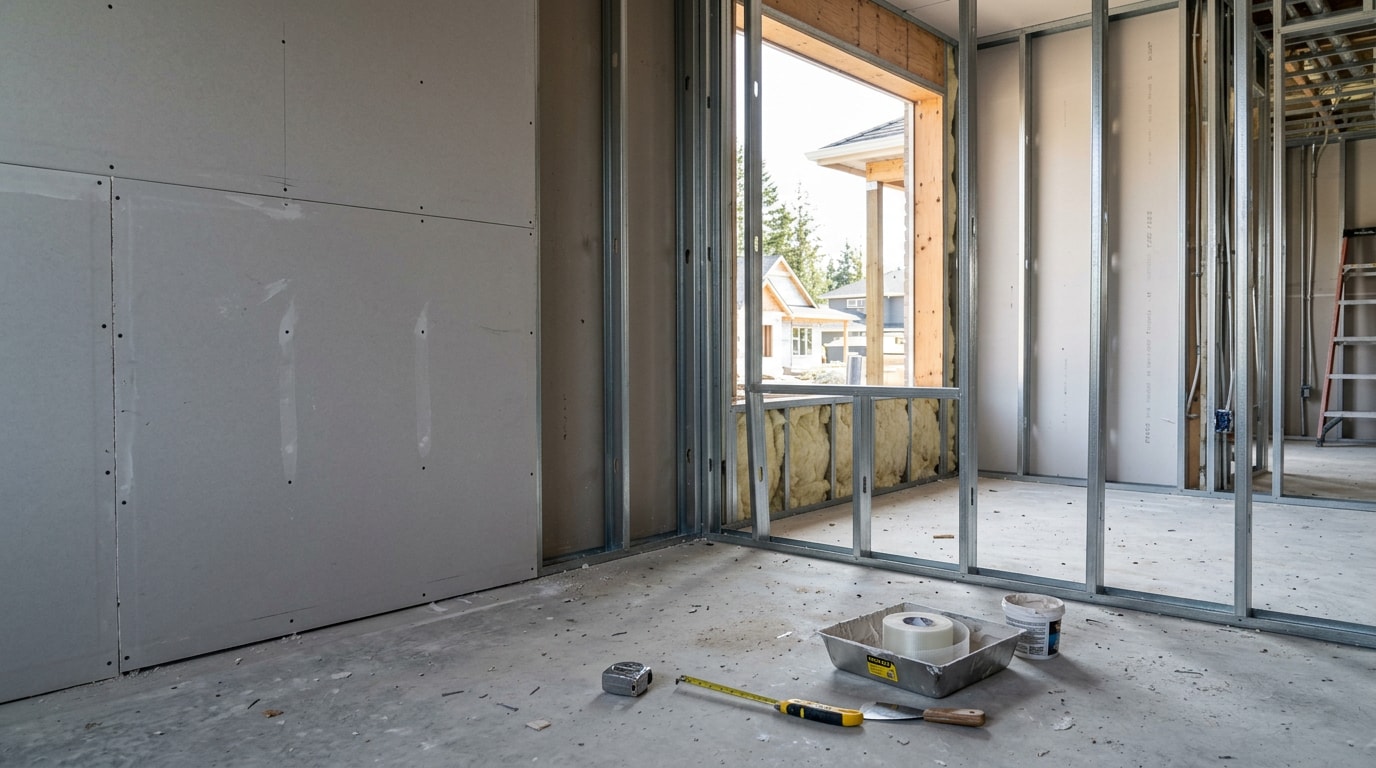
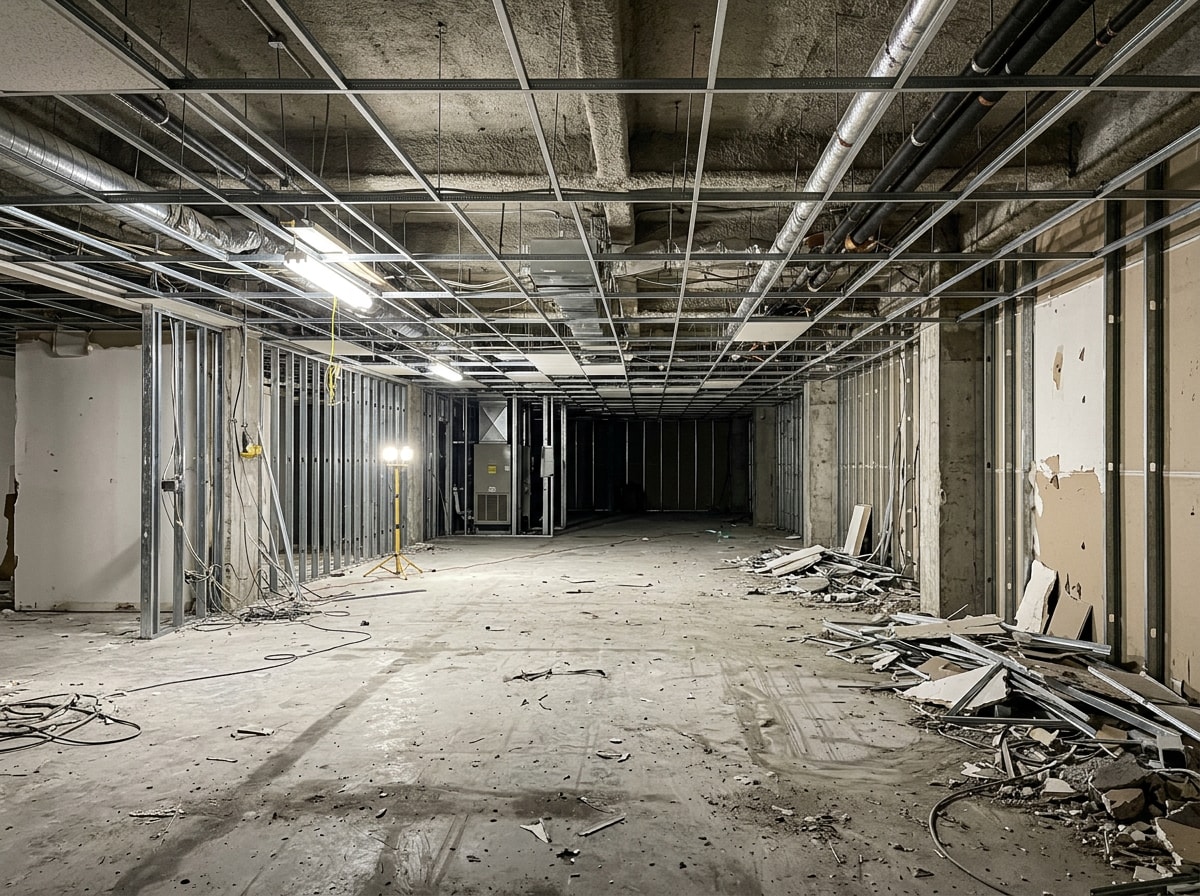
Interior demolition removes walls, ceilings, and flooring without touching the building's structural shell. It's the standard choice for tenant build-out work, office strip-outs, and partial industrial removals where only part of a space needs to come out.
The difference between the two comes down to scope, timeline, and permit review:
| Factor | Interior / Selective Demolition | Full Building Demolition |
|---|---|---|
| Timeline | 1–3 weeks | 3–8+ weeks |
| Cost range | Lower, scales with square footage | Higher, scales with building size |
| Permit complexity | Moderate | Higher, structural and utility review |
| Common use case | Tenant turnover, office strip-out | Vacant building, redevelopment site |
An office tenant converting a 5,000-square-foot suite between leases needs selective demolition. A vacant big-box retail store coming down for redevelopment needs full building demolition.
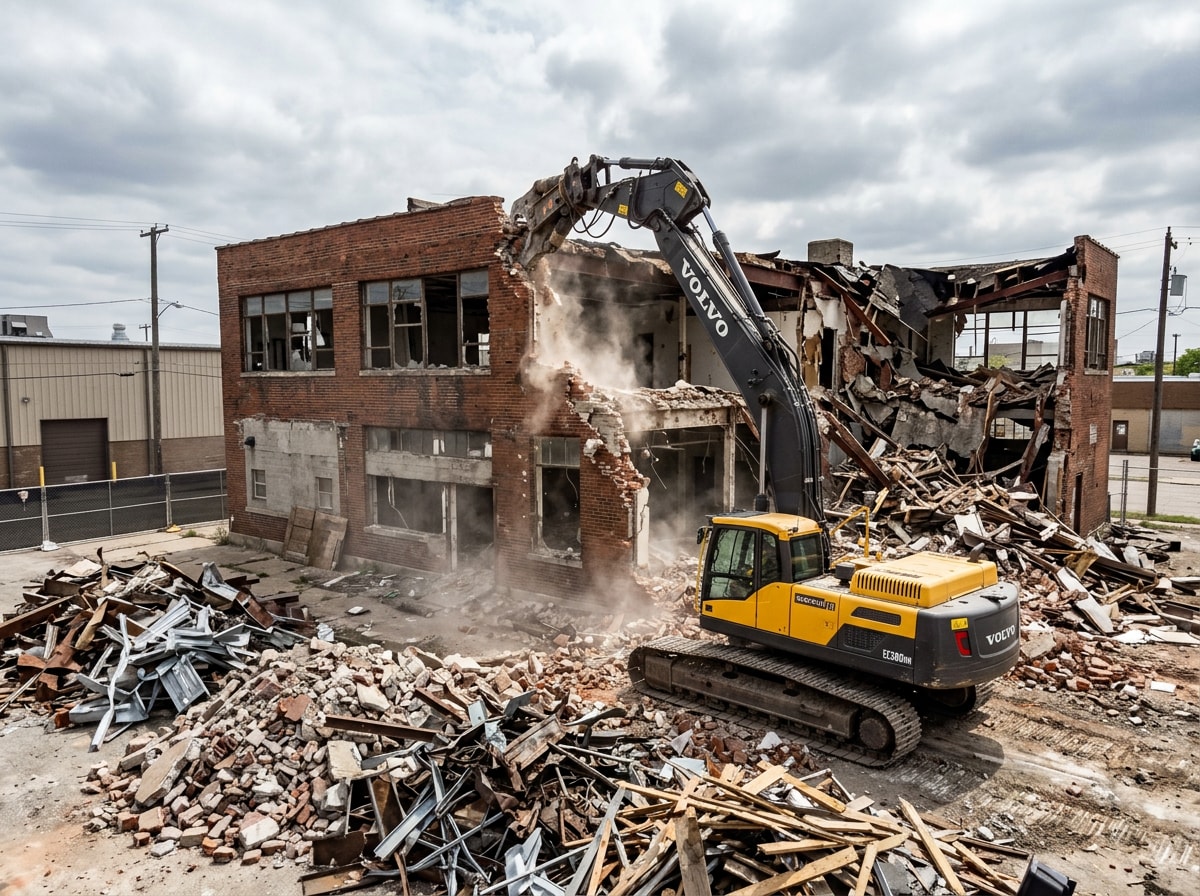
Site Clearing and Debris Removal
Once the teardown wraps, whether full or interior, site clearing and debris removal close out the project. This includes construction debris hauling, material sorting, and leaving the lot or interior space ready for the next phase of construction or occupancy.
What Commercial Demolition Costs in Raleigh, NC
Pricing varies widely because so many variables stack on top of each other: square footage, structure type, number of stories, and whether hazardous materials turn up during inspection. A small interior strip-out runs far less than a full building teardown, and asbestos abatement alone can shift a budget significantly if it's discovered mid-project rather than caught during pre-demolition testing.
Get a firm number before committing. A written estimate should break out:
- Structural/engineering survey and permitting fees
- Asbestos inspection and abatement (if required)
- Labor and equipment mobilization
- Debris hauling and disposal/recycling fees
- Site restoration or grading
Request a free quote once you have drawings or a site address ready; most contractors can't price accurately without seeing the building first.
Permits, Licensing, and Asbestos Rules You Can't Skip
This is where most commercial demolition timelines actually slip, not during the teardown itself.
City of Raleigh Permit Requirements
Every commercial demolition project in Raleigh needs its own permit per building address, and every building address being demolished at the site requires its own permit, and all projects are reviewed for compliance with the Raleigh Development Code and the North Carolina State Building Code. The city treats commercial and residential demolition as separate permit tracks, and any demolition operation at an institutional, commercial, or industrial building is subject to all NESHAP requirements.
Asbestos (NESHAP) Notification
This is the step that catches property owners off guard. Federal rules require an asbestos inspection and a ten (10) working day notification prior to the demolition and renovation of all commercial, institutional, or industrial facilities except residential buildings having four (4) or fewer dwelling units. That notification is mandatory even if the building turns out to be clean, since notification is required for demolitions whether or not asbestos is present, and is also required for building renovations when asbestos is present.
Build that 10-day window into your schedule from day one. We've seen commercial renovation timelines slip by two to three weeks simply because the asbestos notification wasn't filed until after the demolition contract was already signed.
Contractor Licensing
North Carolina requires state licensing for general contractors above a set project threshold: if a project is valued at $40,000 or more, the general contractor must have a license issued by the state, and it's the law. Demolition falls squarely under that rule. The Building Contractor classification covers all building construction and demolition activity including commercial, industrial, institutional, and all residential building construction. Verify any contractor's license status directly through the North Carolina Licensing Board for General Contractors before signing anything.
Safety Standards: What a Serious Contractor Follows
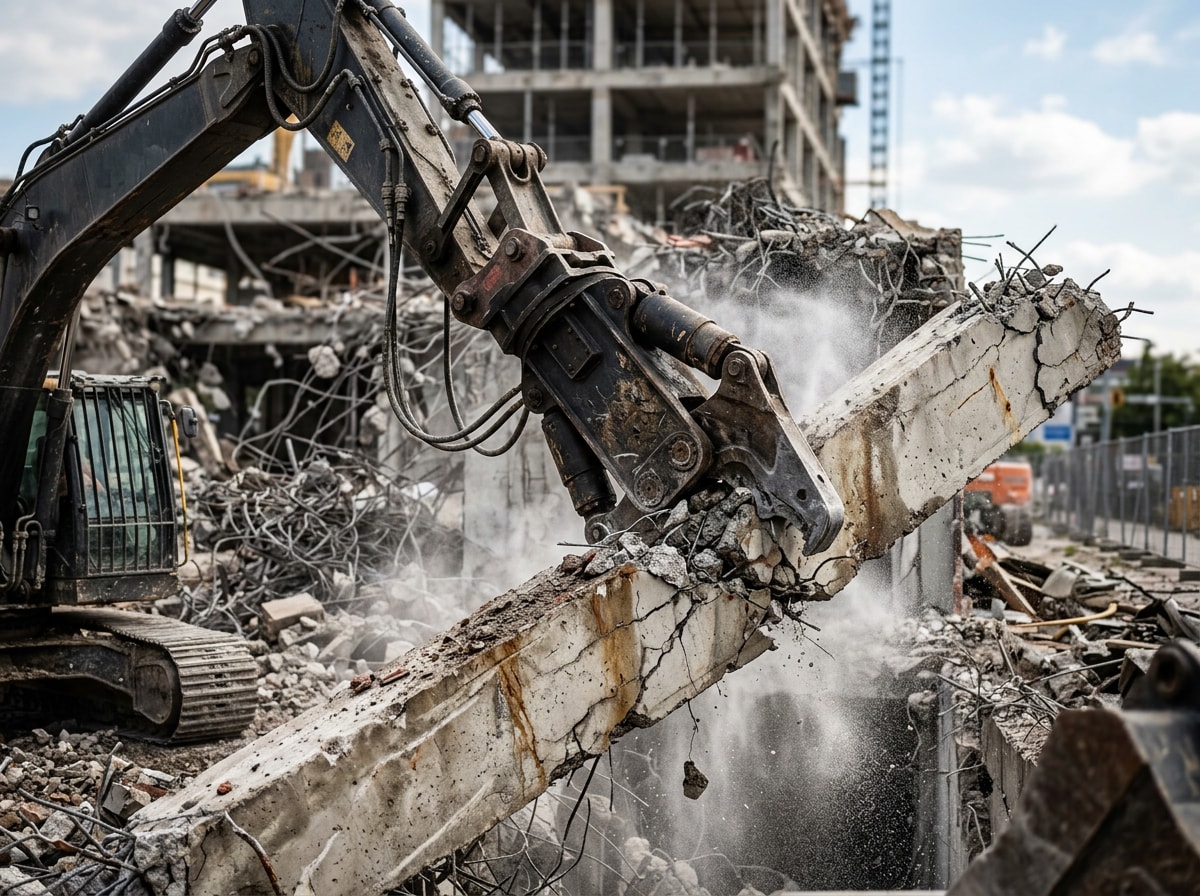
Demolition sites carry hazards a standard construction site doesn't, because the building's actual structural condition is often unknown until crews are already inside it. Federal safety rules reflect that risk directly.
The data on this is telling. 1926.850(a), "Preparatory operations," accounts for up to three-fourths of the citations on a demolition worksite, and 1926.850(a)(1), which requires an engineering survey to be completed prior to starting demolition, accounts for more than half of those citations. In plain terms: most demolition safety violations trace back to a contractor skipping the pre-demolition structural survey, not to equipment failures on site. That single data point is a useful screening question when you're interviewing contractors. Ask to see the written engineering survey before work starts, not after.
A qualified crew will also have a documented plan for:
- Utility shutoffs and capping before any demolition begins
- Fall protection around floor and wall openings
- Dust control and adjacent-structure protection
- Hazardous material testing and handling
How to Vet a Commercial Demolition Contractor in Raleigh
Run through this checklist before you sign anything:
- License status. Confirm the contractor holds an active NC general contractor license in the correct classification.
- Insurance and bonding. Commercial-scale jobs often involve multi-story or occupied buildings, which raises the liability stakes considerably. Ask for a certificate of insurance naming you as an additional insured.
- Engineering survey process. Ask how they document the pre-demolition structural assessment, not just whether they do one.
- Asbestos handling. Confirm they use an NC-accredited asbestos inspector and file NESHAP notifications on your timeline, not theirs.
- Debris plan. Get specifics on hauling, recycling, and final site condition at closeout.
- References on comparable scale. A crew that's only handled small interior strip-outs may not be the right fit for a full building teardown.
Demolition Before Renovation: Why the Teardown Phase Matters
Wake County's commercial investment keeps climbing, and office, retail, restaurant, medical, and industrial property owners are increasingly renovating existing buildings rather than starting from scratch. Well-planned demolition sets the foundation for that renovation work. It's hard to deliver a clean build-out when the teardown phase was rushed or the asbestos notification got filed late.
For a closer look at how renovation projects come together once demolition clears the space, see our guide on commercial building renovation contractors in Wake County, NC.
About the Author
This guide was reviewed by the Roof Puppy commercial projects team, which coordinates roof tear-offs and replacements alongside general and demolition contractors on commercial properties across Raleigh, Durham, and Wake County. Questions about a specific property? Contact us and we'll point you in the right direction, even if the job itself isn't roofing.
FAQ
How much does commercial demolition cost in Raleigh, NC?
Commercial demolition cost in Raleigh varies widely. A small interior strip-out runs far less than a full building teardown. Final pricing depends on square footage, structure type, and whether hazardous materials like asbestos turn up during inspection.
Do I need a permit for commercial demolition in Raleigh, NC?
Yes. Every commercial demolition permit in Raleigh is tied to a specific building address and reviewed against the Raleigh Development Code alongside the NC State Building Code. Each address on a multi-building site needs its own permit.
Is asbestos testing required before commercial demolition?
Yes, in almost every case. Federal NESHAP rules require an asbestos inspection and a 10-working-day notification before demolishing most commercial, institutional, or industrial buildings, and that notification is required even if no asbestos is found.
What is included in commercial demolition services?
Full-service commercial demolition typically includes a structural survey, permitting, structural or selective demolition work, debris removal, and final site cleanup. That's the complete path from standing structure to cleared, buildable site.
How is interior commercial demolition different from full demolition?
It comes down to scope. Interior (selective) demolition removes non-structural elements like walls, ceilings, and flooring. Full demolition takes down the entire building, including the structural shell.
Does a commercial demolition contractor need to be licensed in Raleigh, NC?
Yes. North Carolina requires a state general contractor license for any project valued at $40,000 or more, and demolition falls under the Building Contractor classification that covers commercial, industrial, and institutional work. Verify the license before signing a contract.