GWB in construction Garner, NC simply means gypsum wallboard, the material most people call drywall. You'll see the abbreviation on blueprints, spec sheets, and material takeoffs for nearly every residential and commercial job in the area. Once you know what it stands for, the rest of a project spec sheet gets a lot easier to read.
What Does GWB Stand For?
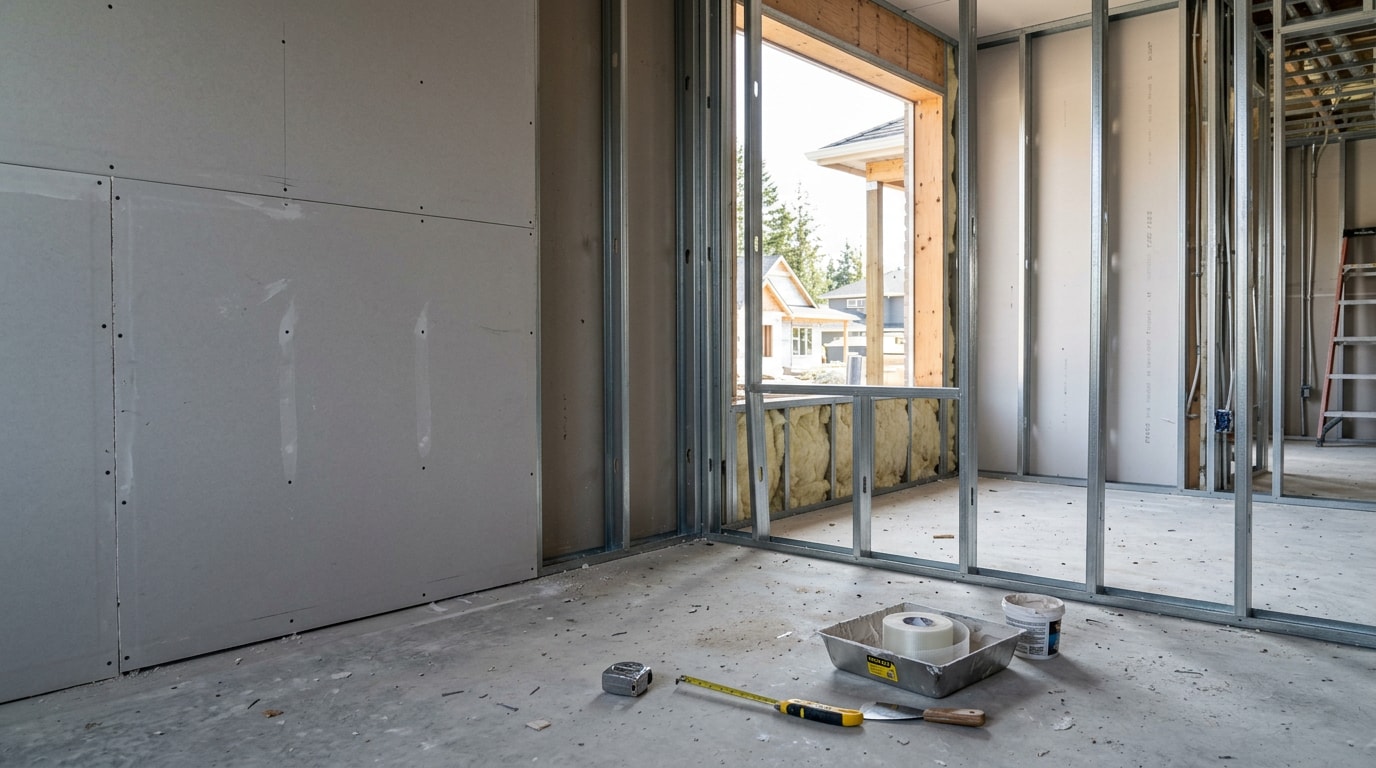
GWB stands for Gypsum Wallboard. It's a rigid panel made by sandwiching a gypsum plaster core between two layers of heavy paper.
Gypsum itself is a soft mineral (calcium sulfate dihydrate) that's mined, ground into powder, mixed with water and additives, then cast into sheets. Those sheets dry into the flat, paintable panels that cover almost every interior wall and ceiling in modern construction.
You'll hear several names for the same product on a Garner job site:
- Drywall – the everyday, shop-floor term
- Gypsum board – the material-science term
- Sheetrock – technically a brand name that became generic over time
- GWB – the abbreviation architects and inspectors use on drawings
Types of GWB and Where Each One Belongs
Not all GWB is the same panel. Builders pick a type based on where it's going and what it needs to resist.
| GWB Type | Core Feature | Typical Use in Garner Homes |
|---|---|---|
| Standard (1/2") | Basic gypsum core, paper facing | Bedrooms, living rooms, hallways |
| Type X (5/8") | Glass-fiber reinforced core for fire resistance | Garage walls, shared walls in duplexes, stairwells |
| Moisture-resistant ("green board") | Water-resistant paper facing | Bathrooms, laundry rooms, mudrooms |
| Abuse-resistant | Denser, impact-rated core | Hallways, mudrooms, rental units |
| Soundproofing panel | Multiple layers with damping compound | Shared walls, home offices, media rooms |
For a look at how drywall work fits into a larger renovation, our luxury home additions guide for Garner homeowners covers framing and finish decisions that come up on addition projects.
Why GWB Is the Default Choice for Interior Walls
Three reasons explain why GWB dominates interior construction: fire resistance, moisture tolerance, and cost.
Fire Resistance
Gypsum holds chemically bound water inside its crystal structure. When exposed to flame, that water releases as steam, which slows heat transfer through the panel. For higher-risk spots like garage-to-house separations or multifamily corridors, builders specify Type X board, which adds reinforcing glass fibers and is tested against the assembly standards maintained by the Gypsum Association.
Mold and Moisture Resistance
Standard paper-faced GWB isn't built for wet rooms. Moisture-resistant board uses a treated facing that holds up better in bathrooms and laundry areas. That distinction matters more in a climate like Garner's, where humid summers and heavy spring rain can turn a slow leak into a mold problem fast. The EPA's guide to mold and moisture control is a solid reference for homeowners trying to keep humidity in check indoors.
Cost and Installation Speed
GWB installs faster than plaster and usually costs less per square foot. Crews hang panels, tape joints, and finish in days rather than the week-plus a wet-plaster job demands.
When Roof Damage Meets GWB: What We See in Garner
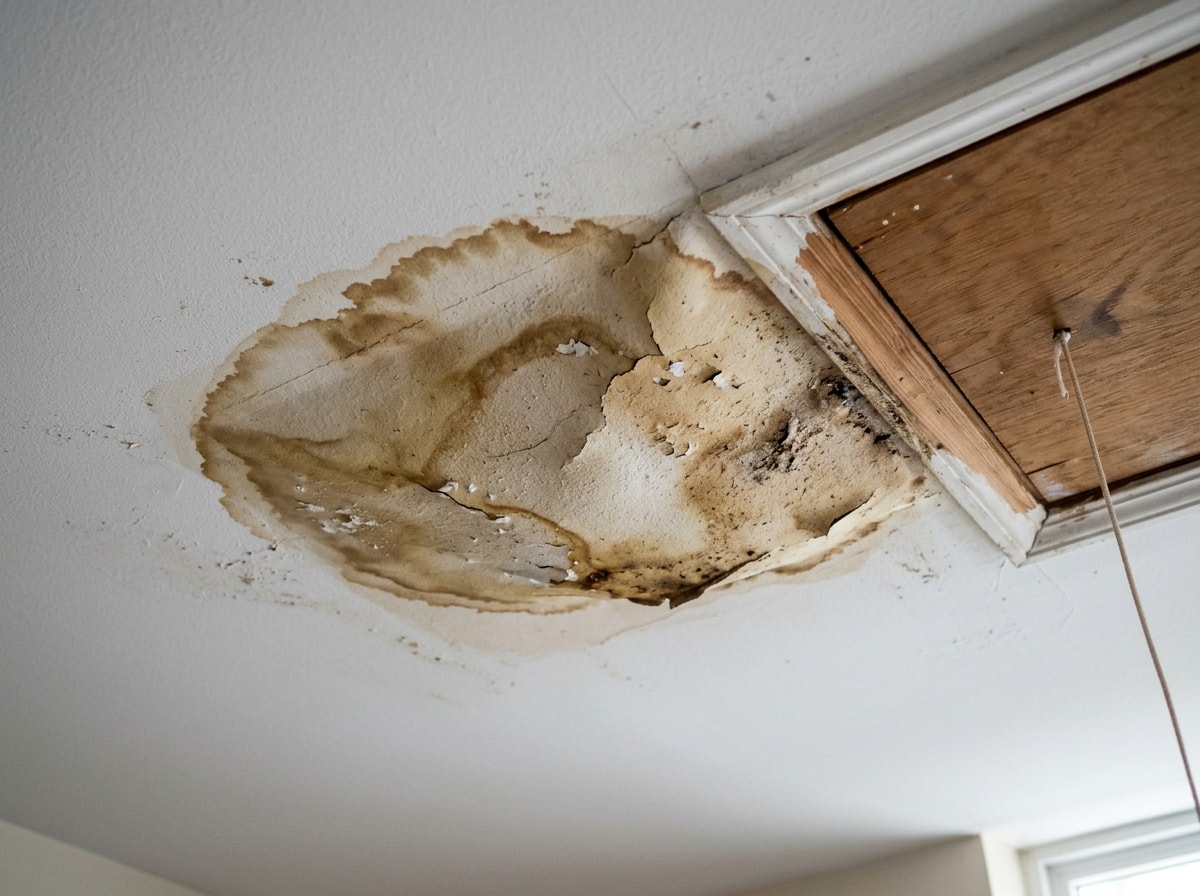
Here's a side of GWB that most "what does GWB mean" articles skip entirely: a huge share of drywall replacement calls in this area don't start with drywall at all. They start with a roof leak.
Our crews see the same pattern across Garner and the rest of Wake County every storm season: wind-driven rain gets under a damaged shingle or flashing, soaks the attic insulation, and shows up days later as a brown ring on a bedroom ceiling. By the time the stain is visible, the GWB above it has usually already lost its structural integrity and needs to come out.
If you're dealing with a ceiling stain, don't just patch the drywall and call it done. Get the roof checked first. We cover both sides of this at {{SITE_URL}} through storm damage repair and roof leak repair, and we can walk you through insurance claims assistance if the damage is significant enough to file.
GWB vs. Drywall vs. Plaster
Two myths keep circulating about this material.
Myth 1: GWB is fragile. Properly installed and finished, GWB resists everyday dents and bumps reasonably well. It's not armor plating, but it's tougher than its reputation suggests.
Myth 2: Drywall and plaster are interchangeable terms. They're not. Traditional plaster is wet-applied in coats over lath and needs days to cure between steps. GWB arrives as a pre-manufactured panel that only needs joint taping, mudding, and sanding, which is why it replaced plaster as the construction-speed standard decades ago.
Hiring Help for a GWB Project in Garner
If your project goes beyond a DIY patch job, you'll likely be working with a licensed general contractor. In North Carolina, every licensed GC firm must designate a "qualifier," the individual whose passed exam and documented trade experience qualify the company's license. The North Carolina Licensing Board for General Contractors maintains the exam requirements and qualifier rules if you want to verify a contractor's standing before signing a contract.
Pay for general contractors in North Carolina varies a lot by specialty, license tier, and whether they're self-employed, with salary trackers showing figures anywhere from the high $50,000s to well over $100,000 a year. That spread is worth keeping in mind when you're weighing a DIY drywall repair against bringing in a licensed crew.
The Bottom Line
GWB, gypsum wallboard, is the standard material for interior walls and ceilings across modern construction, valued for its fire resistance, moisture tolerance, sound control, and installation speed. If a leak, storm, or renovation has you looking at damaged GWB in your Garner home, our team can assess both the roof and the ceiling underneath it in one visit.
Visit our homepage to see our full range of services, check out our Garner, NC service area page for local project examples, or get a free estimate to get a crew out to your property.
About the author: This guide was reviewed by the Roof Puppy field team, which has handled storm-damage and interior-repair calls throughout Garner and Wake County since the company's founding. Questions about a specific repair? Contact Roof Puppy directly.
FAQ
Is GWB the Same as Drywall?
Yes. "Drywall" is the everyday term, while "GWB" is the technical abbreviation used on construction drawings and spec sheets. Both describe the same gypsum-core panel.
What Does GWB Stand for in Construction Drawings?
GWB stands for Gypsum Wallboard. On drawings and specs, it marks where gypsum panels are called out for interior walls and ceilings.
What's the Difference Between Type X and Regular GWB?
Type X is 5/8-inch board with glass-fiber reinforcement in the core, built to meet a minimum one-hour fire-resistance rating in tested wall assemblies. Regular GWB has no fire-rating requirement and is used where code doesn't demand one, like most bedroom and living room walls.
Is GWB Waterproof?
No. Even moisture-resistant "green board" is water-resistant, not waterproof. It holds up better than standard board in damp rooms, but it still isn't rated for direct, sustained water contact like a shower surround.
Is GWB Suitable for Exterior Applications?
Standard GWB is built for indoor use only; its paper facing degrades when exposed to weather. Specialized exterior gypsum sheathing products exist for specific wall assemblies, but that's a different product from the interior panels most people mean by "GWB."
What Is an NC General Contractor Qualifier?
A qualifier is the person whose passed trade exam and documented experience back a general contractor's license in North Carolina. Every licensed GC firm has to designate one, and that person is who the state holds accountable for the firm's compliance.
How Much Does a General Contractor Charge or Make in NC?
It varies widely by specialty and whether they're self-employed. Statewide salary data puts general contractor pay anywhere from the high $50,000s to over $100,000 a year, so getting a few local quotes is the only reliable way to know what your specific project will cost.