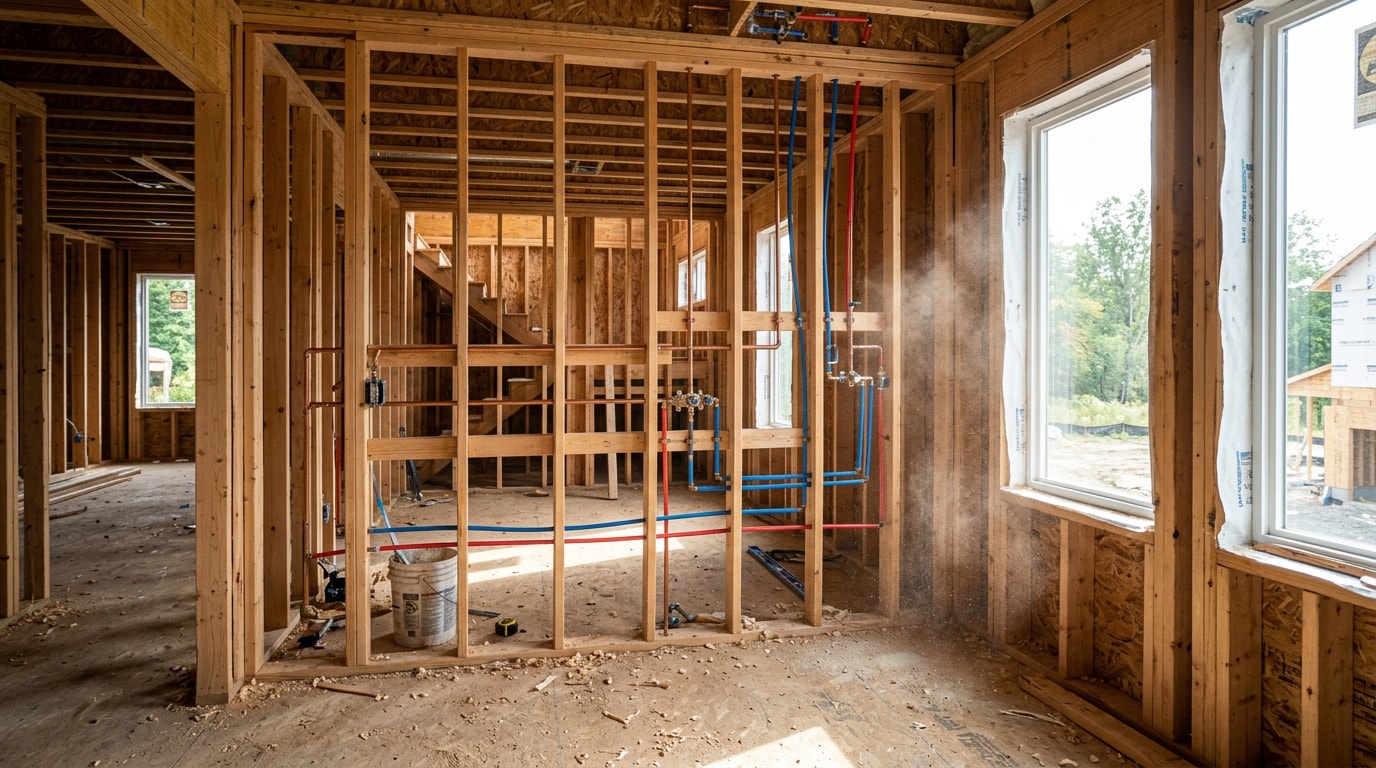
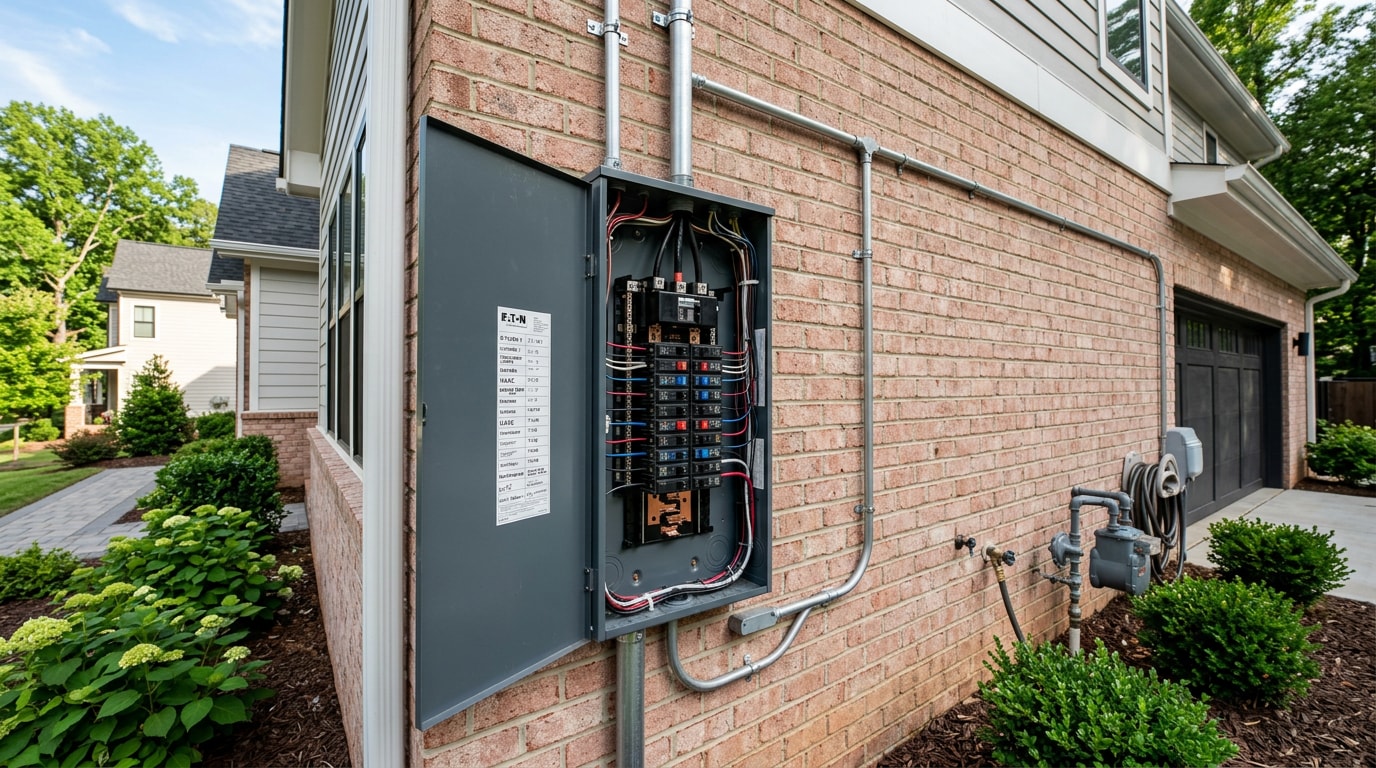
Can a general contractor do electrical work in Durham, NC? In nearly every case, no. North Carolina licenses general contracting and electrical contracting as two separate trades, and blending them on paper is one of the fastest ways to stall a Durham inspection. Here's exactly where the legal line falls, what it costs you if you ignore it, and how to vet the licensed electrician who should actually be pulling the permit.
The Short Answer: GC License vs. Electrical Contractor License
A general contractor's license and an electrical contractor's license come from two different state boards.
They cover different scopes of work entirely.
A GC license is required once a project hits $40,000 in value, covering structural work, trade coordination, and overall project management. An electrical contractor license is required for any paid electrical work, regardless of dollar amount, and it comes from a separate licensing authority.
So unless the general contracting company also holds an active electrical contractor license, or subcontracts the wiring to a firm that does, the GC cannot legally perform the electrical scope itself.
| License Type | Who Issues It | What Triggers the Requirement |
|---|---|---|
| General Contractor | NC Licensing Board for General Contractors | Required for projects valued at $40,000 or more |
| Electrical Contractor | NC Board of Examiners of Electrical Contractors (NCBEEC) | Required for any paid electrical work, any dollar amount |
That $40,000 threshold for general contracting is set by the NC Licensing Board for General Contractors, which states plainly that a general contractor must hold a state license once a job crosses that line. Electrical work doesn't get that exemption at all.
North Carolina Electrical Contractor License Tiers, Explained
Once you know a separate electrical license is required, the next question is which tier covers your project. North Carolina splits electrical contractor licenses into three main classifications based on project value and voltage.
| License Tier | Project Value Cap | Voltage Cap |
|---|---|---|
| Limited | Up to $60,000 per project | Under 600 volts |
| Intermediate | Up to $150,000 per project | No separate voltage cap |
| Unlimited | No project value limit | No voltage limit |
These classification thresholds and the licensing process itself are governed by NC General Statutes Chapter 87, Article 4, the state law that created the Board of Examiners of Electrical Contractors. Because thresholds can be revised by the legislature, it's worth confirming current limits on the NCBEEC site before assuming a contractor's classification covers your scope.
Journeyman vs. Master Electrician: What Each Can Actually Do
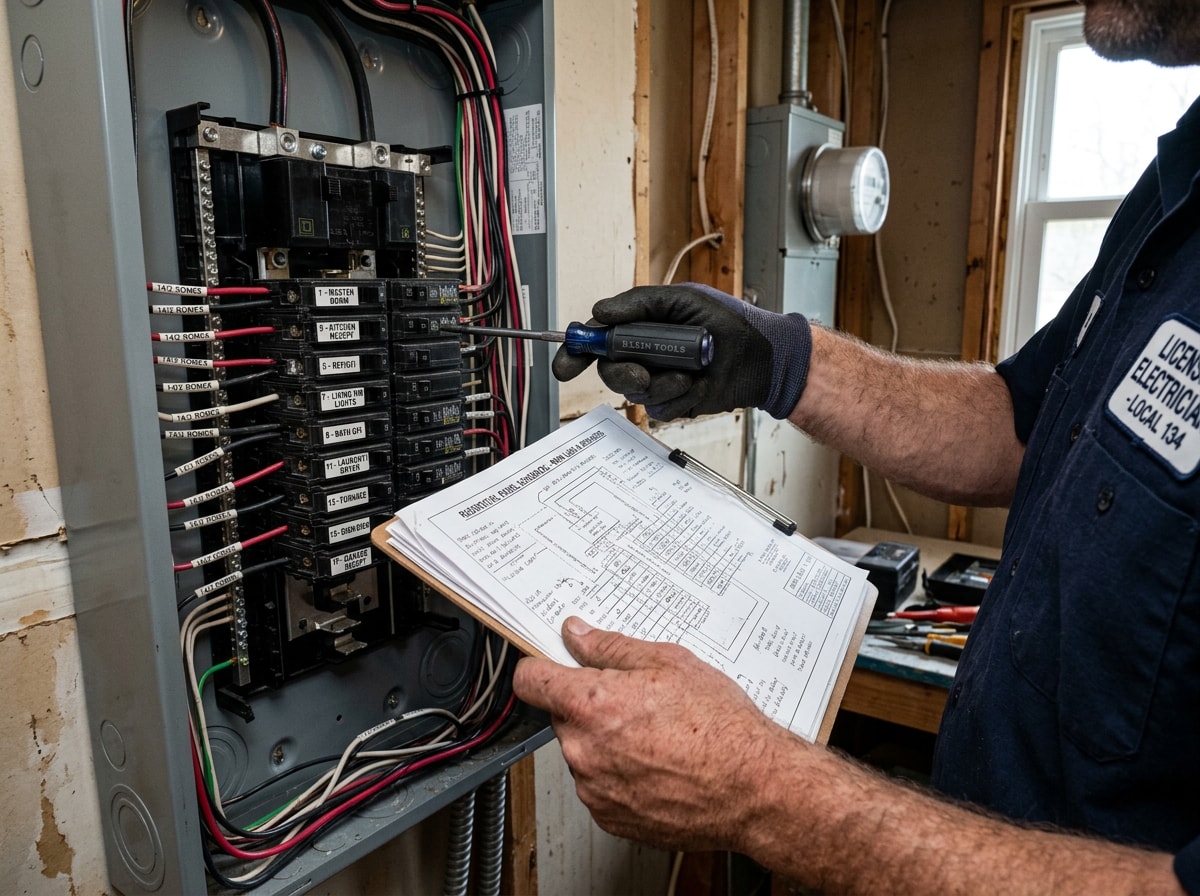
A journeyman electrician can perform most residential and light commercial wiring, but only under the supervision of a licensed electrical contractor. The credential proves hands-on skill. It does not authorize someone to run an independent electrical business or pull permits solo.
A master electrician has more experience and a higher-level exam behind their credential. Masters can supervise other electricians and often serve as the qualifying individual for an electrical contracting firm.
Even a master electrician still needs the business itself to hold a proper electrical contractor license before taking on paid work. Individual skill and company licensure are not the same thing, and Durham inspectors check the business license, not just the person swinging the tools.
What Happens If You Hire an Unlicensed Electrician in Durham
Skipping proper licensing creates problems that go well past a failed inspection.
- Work done without the correct license can void homeowner's insurance coverage.
- It can create direct liability if faulty wiring causes a fire or injury.
- It often means redoing wiring later because it was never permitted or inspected correctly the first time.
Durham inspectors check for a permit tied to a licensed electrical contractor, not just a GC's name on the job file. If that documentation is missing, the project can stall at the inspection stage, sometimes with walls already closed up around work that has to come back out.
On exterior remodels where we're coordinating roofing, attic vents, or skylights alongside other trades, we won't let a sub touch a circuit until their NCBEEC license number checks out active. It's a five-minute lookup that has saved more than one project from a failed reinspection.
Electrical Permit Requirements in Durham, NC
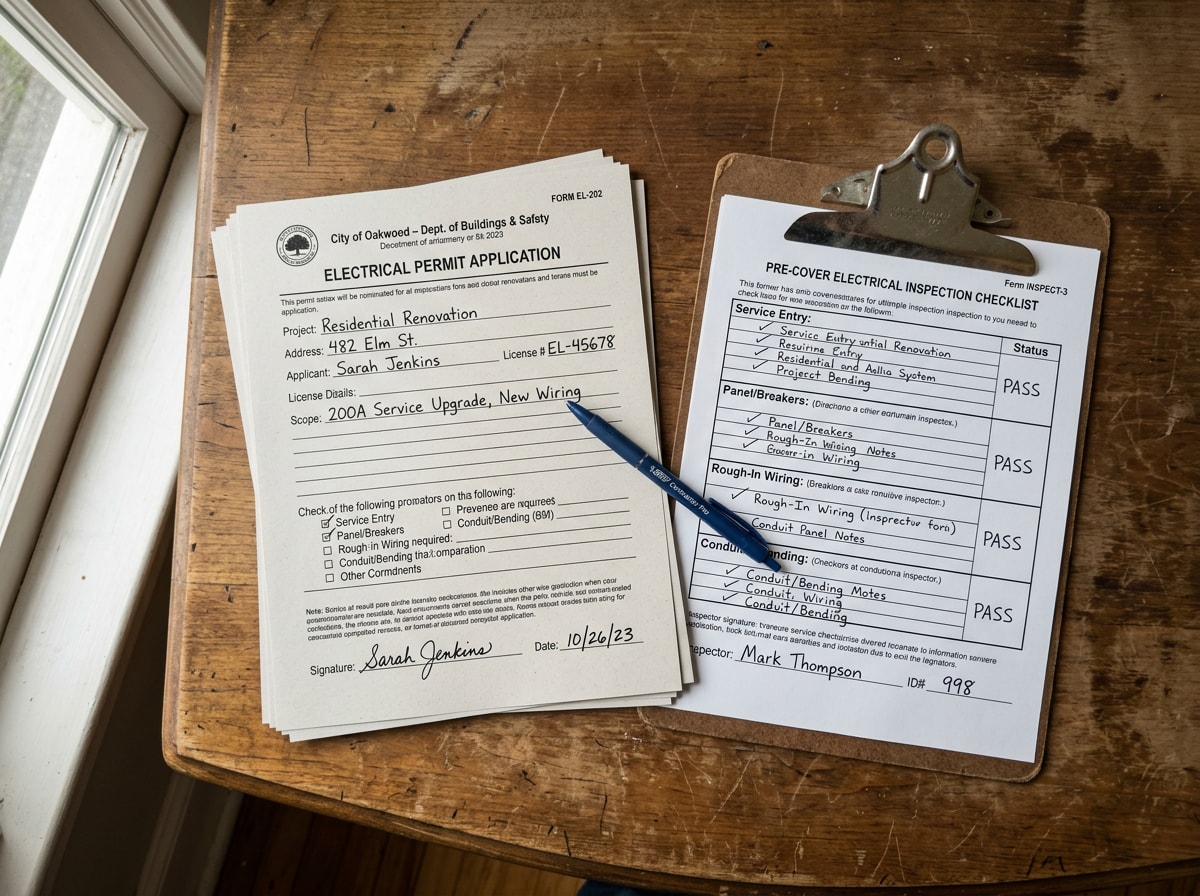
Durham requires an electrical permit for most wiring, panel, and circuit work. That permit is typically pulled by the licensed electrical contractor doing the job, not by the general contractor overseeing the project.
Permits exist so inspectors can confirm the work meets code before walls close up or power gets connected. The City of Durham's electrical permit requirements spell out exactly which jobs need a permit and what documentation a contractor has to submit.
One detail worth knowing: Durham does let a homeowner pull their own permit and do electrical work on their primary residence, but only after completing a specific homeowner-as-contractor form before the permit is issued. That exemption doesn't extend to rental property or work done for someone else.
Skipping a permit, even on a small job, tends to surface later during a home sale inspection. If you're unsure which permits apply to your project, our Durham, NC area page has local resources, or you can reach out directly through Contact us.
How to Vet a Licensed Electrician in Durham
Picking the right electrician comes down to a handful of concrete checks, not guesswork.
- Verify the license number and classification against the NCBEEC database before any work starts.
- Confirm active liability insurance and ask for proof in writing.
- Get a written estimate before work begins, not a verbal ballpark.
- Ask who is pulling the permit, since that's typically the electrical contractor's job, not the GC's.
- Ask for references from recent jobs similar in scope to yours, not just a generic portfolio.
Experience with your specific job type matters too. A panel upgrade, an EV charger install, and a whole-home rewire call for different expertise, so ask pointed questions about comparable past projects rather than taking "we do it all" at face value.
What Electrical Work Typically Costs in Durham
Electrical pricing varies widely by scope, so there's no single number that applies across every job.
| Job Type | Relative Cost Driver |
|---|---|
| Fixture replacement, small repairs | Lower cost; minimal labor and materials |
| New circuit installation | Moderate cost; depends on run length and access |
| Panel upgrade or replacement | Higher cost; permit fees, materials, inspection time |
| Whole-home rewiring | Highest cost; extensive labor and code compliance work |
| Emergency or after-hours service | Premium pricing over scheduled appointments |
Getting a written, project-specific estimate before work begins is the only reliable way to avoid surprises. A free estimate gives you real numbers instead of rough averages.
Coordinating a GC and an Electrician on the Same Project
Most remodels involve both a general contractor and a licensed electrical subcontractor, and clarity up front prevents scheduling headaches later.
The GC typically manages overall scheduling, coordinates trades, and handles structural scope like framing, roofing, or siding. The licensed electrical contractor handles the wiring itself, pulls the electrical permit, and manages inspection sign-off directly with the city.
This split matters even on projects that look purely structural. Adding an attic vent fan, wiring a new skylight, or running power to an exterior fixture during a roof or siding job still falls under electrical licensing rules, which is why a reputable roofing contractor coordinates with a licensed electrician rather than wiring it in-house. The same goes for attic vent installation or skylight installation, where electrical tie-ins are common.
Ask early about expected inspection dates so delays don't catch you off guard mid-project. Good communication between homeowner, GC, and electrical subcontractor prevents most scheduling conflicts. For a closer look at how licensing works for general contractors specifically, our guide on hiring a licensed general contractor in Chapel Hill breaks down the credentials to check before you sign anything.
If you're planning an exterior project in Durham and need help lining up the right trades, our homepage has an overview of how we coordinate multi-trade jobs from roof to foundation.
FAQ
What minor electrical work can a general contractor do in Durham?
Very little, if any, without a separate license. North Carolina requires an electrical contractor license for any paid electrical work, regardless of dollar amount, so even small tasks like adding an outlet or fixture technically fall under that licensing requirement when done for pay.
Can a general contractor subcontract electrical work to a licensed electrician?
Yes, and this is the standard, legal way a GC handles electrical scope. The GC manages the overall project and schedule, while the licensed electrical subcontractor performs the wiring, pulls the electrical permit, and handles inspection sign-off.
How do I verify an electrician's license in North Carolina?
Search the contractor's name or license number through the NCBEEC's public license lookup tool. The database shows whether the license is active, which tier it covers, and whether there's any disciplinary history on file.
What are the requirements to become a general contractor in North Carolina?
General contractor licensing in North Carolina requires meeting experience and financial responsibility thresholds tied to project size, along with passing a state exam. Requirements scale with license classification, including Limited, Intermediate, or Unlimited. Current requirements are listed on the NC Licensing Board for General Contractors site.
Can a homeowner do their own electrical work in NC?
North Carolina generally allows a homeowner to do electrical work on their own primary residence under a homeowner exemption, but a permit is still required, along with a homeowner-as-contractor form submitted before that permit is issued. This exemption typically doesn't extend to rental properties or work done for someone else.
What are red flags for electricians in Durham?
Watch for contractors who can't provide a license number, insist on cash-only payment, skip written estimates, or avoid pulling permits. These shortcuts often signal unlicensed or uninsured work, which puts your project and your home's safety at risk.