TCO in construction Apex, NC almost always means one specific thing: a Temporary Certificate of Occupancy issued by the Town once a building is safe to use but not fully finished. The term gets confused online because "TCO" also stands for Total Cost of Ownership in general construction finance writing. This guide sorts out which meaning applies to your project, then walks through the actual Apex permit and inspection sequence that leads to one.
TCO Has Two Meanings in Construction. Here's the One That Matters in Apex
Search "TCO in construction" and you'll find two unrelated definitions mixed together on the same results page. TCO in construction can refer to two different but important concepts: Total Cost of Ownership, which measures the full financial impact of a project, and a Temporary Certificate of Occupancy, a legal document that allows limited use of a building before final approval.
Total Cost of Ownership is a budgeting framework contractors and owners use to compare materials, equipment, and systems over a building's lifespan. It has nothing to do with permits or inspections.
When someone searches "TCO in construction Apex, NC" specifically, they're almost never asking about lifecycle budgeting. They're asking about occupancy timing on a real, local project. That's the definition this guide covers.
A Temporary Certificate of Occupancy lets a building open before every punch-list item is closed out. A temporary certificate of occupancy may be issued permitting occupancy for a stated period of time of either the entire building or specified portions if the inspector finds the building may safely be occupied prior to final completion, and a permit holder may request one if the conditions of the North Carolina State Building Code are met. That authority comes from state law, not just local policy.
How a TCO Works Through Apex's Permit Process
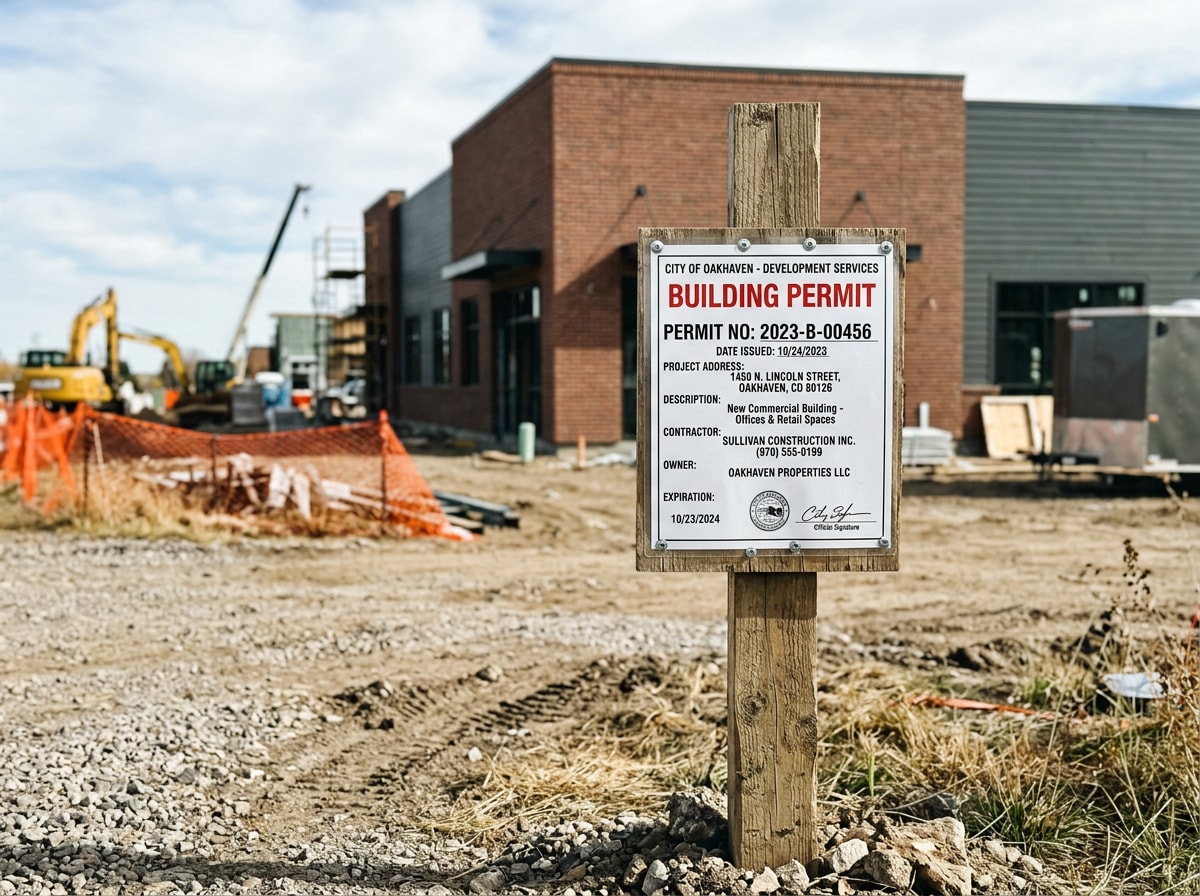
The Building Permits Department is responsible for reviewing and approving construction plans, performing field inspections, answering questions pertaining to codes, and more. A TCO sits at the tail end of that pipeline.
Plan review happens before any work starts, confirming drawings meet code. Once a permit is issued, field inspectors check the project at defined milestones. Building permits are issued by the local Code Enforcement Office having jurisdiction, and it is the designer's responsibility to obtain all permits and additional plan reviews required for the project. Apex is one of the jurisdictions North Carolina authorizes to run its own local commercial plan review rather than routing it through the state.
A full Certificate of Occupancy can't be issued until every trade (building, electrical, plumbing, mechanical, fire) signs off and the final inspection passes. A TCO fills the gap when life-safety systems clear but finish work, like flooring or signage, is still open.
We've pulled permits and scheduled finals on exterior projects across Apex, Cary, and Raleigh for years, and the pattern is consistent: the trades that hold up a final CO are almost never the ones that matter for occupant safety. It's typically landscaping, striping, or a punch-list item on an exterior finish, which is exactly what a TCO is built to work around.
How Long Does a TCO Last in Apex, NC?
There's no single statewide number, and that trips people up.
A Temporary Certificate of Occupancy permits the owner or operator to have full use of the building without the building final being approved, and the suggested maximum time frame for a Temporary CO is 60 days, which could be extended to a maximum of 180 days, during which all minor code violations must be corrected and the final inspections called in and approved.
Neighboring Raleigh runs it differently. A TCO/TCOC may be issued for specific portions of a building deemed safe for occupancy, must be reapplied for every 30 days up to a maximum of 180 days, and if it exceeds 180 days with no action, the contractor is in violation and utilities may be terminated.
The takeaway: don't assume your TCO term matches what a friend's project got in a different city, or even what a generic guide tells you. Confirm the exact window and renewal requirement with the inspector handling your specific permit.
| Jurisdiction | Typical TCO Window | Renewal Pattern |
|---|---|---|
| Apex / general NC guidance | Up to 60 days, extendable | Case-by-case, set by local building official |
| Raleigh | 30 days per cycle | Must reapply every 30 days, 180-day cap |
| State law baseline | "Stated period of time" | Inspector sets terms per G.S. 160D-1116 |
Inspection Milestones That Lead to a TCO
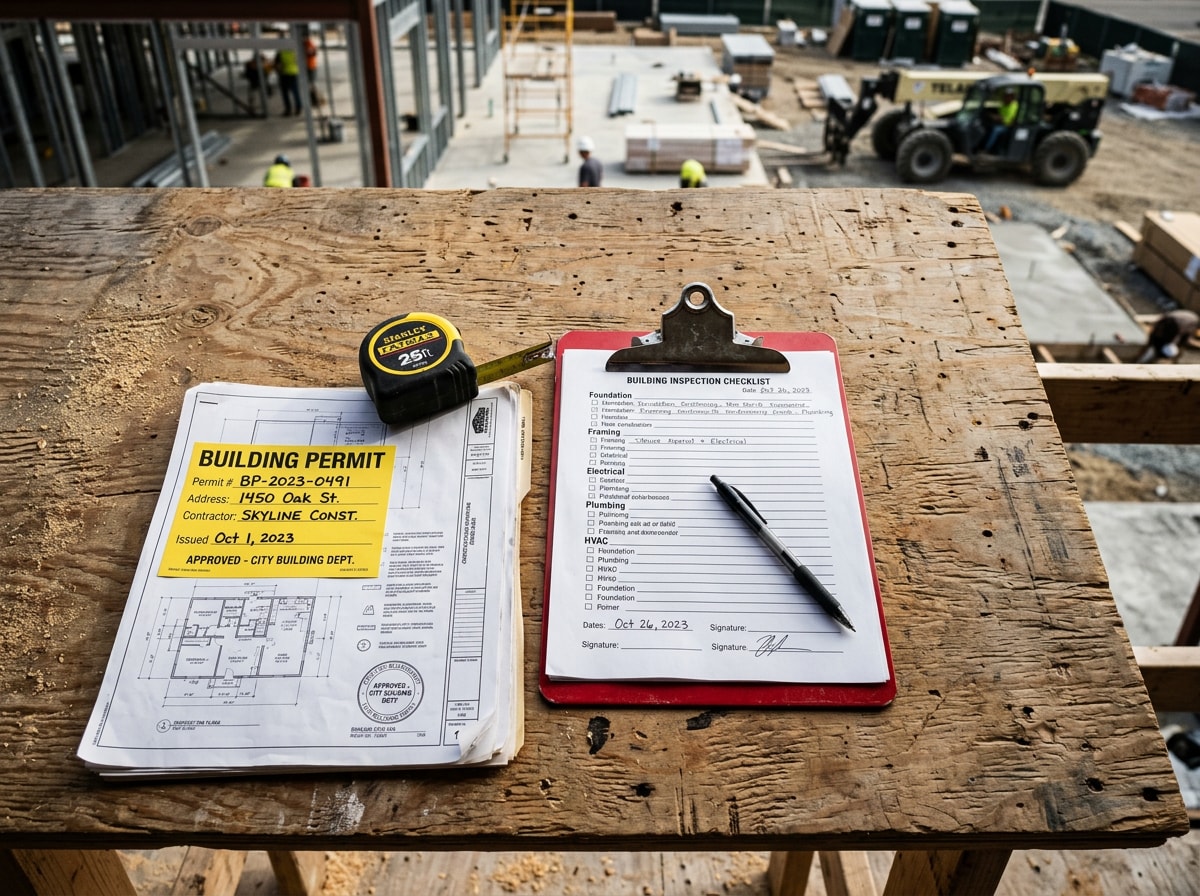
A handful of inspections stand between a permit and a TCO. Apex has updated a few of these in ways that catch contractors off guard if they're working from an older checklist.
- Framing and rough-in. Structural framing plus rough electrical, plumbing, and mechanical all get inspected before anything is covered.
- Concealed insulation (updated).
The Town of Apex no longer performs concealed insulation inspections as a standalone step; the air barrier required in concealed areas is now inspected during the rough-in inspection instead. Treat this as folded into rough-in, not a separate visit.
- Brick or stone veneer.
All lintels that are required to be bolted to the framing for support cannot be covered by any exterior wall covering before approval, and the bolted lintels are inspected during the rough-in inspection. Veneer installers sometimes assume this is a post-installation check; it isn't.
- Conditional power and mechanical.
These inspections are only performed upon request by the contractor. They're narrower than a TCO: conditional approval covers energizing specific circuits for construction purposes, not occupancy of the space.
- Final inspection. The last step before a full CO, and the point where any TCO conditions get closed out.
Remote Inspections: A Real Way to Save Days
Remote inspections are available upon request for certain inspection types, in accordance with guidance from the NC Department of Insurance.
When requesting one, documentation normally required for an in-person inspection must be uploaded, and an inspector will reach out if more information is needed or to schedule the video inspection.
Some inspections aren't eligible for remote review based on the project or video assessment, in which case the inspector may require an in-person visit.
This isn't a workaround for every inspection, but it can shave real time off a schedule racing toward a TCO deadline tied to a lease start date.
Planning a Build-Out Around TCO Timing
If you're a tenant, owner, or developer with a hard move-in date, factor TCO timing into your schedule early, not after the final inspection gets delayed. A retail build-out, restaurant, or office fit-out often has lease obligations tied to an opening date, and a TCO can legitimately bridge the gap between substantial completion and full sign-off.
The exterior scope is frequently what sits between a TCO and a final CO. We see it constantly on commercial projects: the roof, siding, and exterior trades clear inspection fine, but a punch-list item on flashing, a veneer detail, or exterior drainage holds up the full certificate. Projects involving commercial roofing or a full roof replacement should get those trades scheduled and inspected early in the sequence, not at the end, so they're not the reason a TCO drags toward its deadline.
Residential projects run into the same issue on a smaller scale. If you're coordinating a larger build like an addition or full exterior renovation, our guide on project management for residential construction in Apex, NC covers how to sequence trades so inspections don't stack up against each other.
Working with a licensed contractor who schedules inspections in the right order avoids most late-schedule TCO surprises. Contact Roof Puppy for a free estimate if your Apex project includes roofing, siding, or exterior work that needs to clear inspection on schedule, and visit our Apex, NC service area page for local project examples.
For a broader look at how roofing and exterior work fits into the full permitting picture, our roofing contractor services page breaks down what's involved on both residential and commercial jobs, and Roof Puppy's homepage has our full service area and contact details.
FAQ
What does TCO stand for in construction?
TCO most often stands for Temporary Certificate of Occupancy, the document that lets a building be used before every finish item is complete. In cost-management and finance contexts, TCO can also mean Total Cost of Ownership, an unrelated budgeting concept.
What's the difference between a CO and a TCO?
A Certificate of Occupancy (CO) means the building passed every required final inspection and is fully complete. A TCO is a conditional, time-limited version issued when life-safety systems pass but minor work remains.
How long does a temporary certificate of occupancy last in North Carolina?
The suggested maximum time frame for a Temporary CO is 60 days, which could be extended to a maximum of 180 days. Some cities, like Raleigh, require reapplying every 30 days up to that same 180-day cap. Confirm the exact term with the inspector on your specific permit.
What can I build in NC without a permit?
No permit is required for construction, installation, repair, replacement, or alteration costing forty thousand dollars or less performed in accordance with the current North Carolina State Building Code, unless the work involves the addition, repair, or replacement of load-bearing structures.
Replacement of windows, doors, exterior siding, or the pickets, railings, stair treads, and decking of porches and exterior decks is exempt from permitting when done under that threshold. This exemption list is separate from the CO/TCO process, which only applies to work that required a permit in the first place.
What are the requirements for a building permit in North Carolina?
Commercial and larger residential projects generally need stamped plans, site information, applicable fees, and licensed contractor documentation. Smaller jobs sometimes qualify for simplified review. Completing every permit requirement is the prerequisite step before any CO or TCO can be issued.
Is there a noise ordinance in Apex, NC?
Yes. Apex restricts construction noise to set daytime hours on weekdays, with tighter limits on weekends. This matters for crews racing to finish punch-list items before a TCO deadline, since restricted hours can slow the final push toward full occupancy.
Who issues building permits and TCOs in Apex, NC?
The Town of Apex Building Inspections & Permitting Department reviews plans, performs field inspections, and issues both temporary and final certificates of occupancy for permitted projects inside town limits.